Travel Blog December 9, 2025 to January 26, 2026A Western Around-the-World Trip Including Countries in Indochina and the Greater Horn of AfricaVancouver, B.C., Canada to South Sudan via Laos, Cambodia, Singapore, Brunei, Djibouti, and SomalilandPART I: Laos to Singapore, December 9 - 31, 2025Tuesday-Wednesday, December 9-10, 2025: Vancouver, B.C., Canada to Vientiane, Laos
Our Air Canada flight left about an hour later than scheduled, but by that time we were in the plane on the tarmac and most of us were probably asleep as it was already about midnight local time. Having treated myself to a business class seat, I didn't mind the length of the 16-plus-hour flight as I was able to lie flat and must have slept quite a few hours as it was about 10 o'clock a.m. Vancouver time when I awoke. We were served dinner and breakfast, arriving in Bangkok some time after six o'clock in the morning two days later. Thursday, December 11: Vientiane, Laos
I arrived in Vientiane, the capital of the Lao People's Democratic Republic (LPDR), (my UN country number 145), once known as the Land of a Million Elephants, around 1:00 p.m. today after a five-hour lay-over in Bangkok, which I spent in Thai Airways business lounge, and got through customs relatively quickly, having procured a Lao e-visa on line a week before and having filled out the online arrival card the morning of the day I left Vancouver. My luggage arrived quickly and I was met by Tong, holding a sign with my name on it, as well as the name of the British tour company that had organised my Laos North to South tour, All Points East. On our short drive to my hotel, Tong explained that Laos has 7.9 million population, while the city of Vientiane has about 756,000. On December 2 this year (i.e. last week), Lao celebrated 50 years of independence. Remnants of said celebration were still apparent, namely two flags being prominently displayed at various points along our route. The first, the national flag, consisting of a white filled-in circle (representing a full moon over the Mekong) on a background of blue (the Mekong River, a vital waterway and symbol of the nation's prosperity), and with top and bottom borders in red (representing the blood shed by the Lao people in their struggle for independence), was adopted in 1975. The other flag was the yellow hammer and sickle on a red background, representing the ruling Communist party (LPRP) and the country's communist ideology. Wikipedia tells me that LPDR, the only landlocked country in Southeast Asia, is located on the Indochinese Peninsula, and is bordered by Myanmar and China to the northwest, Vietnam to the east, Cambodia to the southeast, and Thailand to the west and southwest. The country traces its historic and cultural identity to Lan Xang, a kingdom that existed from the 13th to 18th centuries. Due to its location, the kingdom was a hub for overland trade. In 1707, Lan Xang split into three kingdoms: Luang Prabang, Vientiane, and Champasak. In 1893, these kingdoms were unified under French protection as part of French Indochina. Laos was under Japanese administration during World War II, gaining independence in 1945 before returning to French administration until achieving autonomy in 1949. The country regained full independence in 1953 as the Kingdom of Laos, with a constitutional monarchy under Sisavang Vong. A Civil War from 1959 to 1975 saw the communist Pathet Lao, supported by North Vietnam, China, and the Soviet Union, oppose the Royal Lao Armed Forces, backed by the United States. The war ended with the establishment in 1975 of the Lao People's Democratic Republic, which aligned with the Soviet Union until the latter's dissolution in 1991. As one of the five active communist states as of 2025 (China, Cuba, Laos, North Korea, and Vietnam), and the only one that self-designates as a people's democratic state, Laos has been governed by the Lao People's Revolutionary Party (LPRP) since 1975. The World Bank has recognized Laos as one of Southeast Asia and Pacific's fastest growing economies, with annual GDP growth averaging 7.4% since 2009, driven by expanding tourism, energy exports, and foreign investment, while the United Nations classifies it as a least developed country. Its official language is Lao, belonging to the Tai-Kadai language family and more than half of the population speaks Lao fluently. The remainder, particularly in rural areas, speak ethnic minority languages. The Lao alphabet, which evolved sometime between the 13th and 14th centuries, was derived from the Khmer script. Languages such as Khmu (Austroasiatic) and Hmong (Hmong-Mien) are spoken by minorities, particularly in the midland and highland areas. Of interest to me, French is used in the government and commerce, and Laos is a member of the French-speaking organization of La Francophonie. As of 2025, French speakers in Laos represent about 3 percent of the country's population. Despite learning that tidbit, so far I have only spoken English since my arrival here, though I did ask the Lao for hello (sabaidee), which coincidentally is the name of my hotel here, and thank you (kop chai) with thank you very much being kop chai lai lai! Frangipani (Plumeria alba or Plumeria rubra) is the national flower. Friday, December 12: Vientiane, Laos
After a more or less acceptable breakfast (at least they offered croissants, fresh fruit, and yoghurt), I went outside the hotel for about two hours of wandering around Vientiane on foot, and I must say I was not impressed. I was aiming for the Mekong River, but despite the map I had been given by Tong, showing that it ran parallel to the highway, it was still miles away once I'd crossed said highway. It was only really visible at a fair distance. It is difficult for me to fathom that this is a capital city. Although there were plenty of ornate, gold-painted wats (temples), the sidewalks were for the most part cracked, full of litter, and so difficult to walk on that for most of the time I ambled along the road. Even so, that was hampered by the fact that, like in France (or Belgium for that matter), cars were parked on the sidewalk. It was very difficult to cross the street without waiting for a break in the traffic. Although there were plenty of crosswalks, drivers seemed to ignore them completely as well as any pedestrians wishing to cross. Not one vehicle slowed down or stopped to wait for me to cross. And when there were stop signs or actual traffic lights changing from green to amber to red, the traffic drove straight through the red lights anyway. There was no respect at all for road safety. Even on a two-way street, vehicles would drive whichever side of the road they liked. There was one upside to all this: at least they drove at a more or less slow and steady pace. I did not see anyone speeding. By the end of the two hours and on returning to my hotel, I decided I had seen all I wanted to see in this city and would spend the rest of my days until my tour started in my room working ... or sleeping.     Saturday, December 13: Vientiane, Laos
 At breakfast, I met the other woman on my tour, a retired policewoman from England now living in Scotland, who, like me, has visited all 7 continents and so far 85 countries and counting. She went off to explore the city while I stayed in my hotel room and worked on a book translation. At 4:00 p.m. we met our tour guide, Pong, who has been guiding for 19 years after completing a 5-year university degree in politics. Unfortunately, our planned exploration of the city on foot was not very successful for it came on to rain quite heavily. Consequently, sipping sundowners on the banks of the Mekong River as we watched the sunset, as per our itinerary, wasn't possible. Instead, we walked through a damp market that wasn't yet set up due to the rain and then into a coffee shop to wait for the rain to stop and finally to an early dinner of vegetarian fried rice, which was very flavourful, accompanied by a can of the local beer, Beerlao. Consequently, I don't have much to show you photowise, but from what Pong describes, it seems we should have better luck starting tomorrow. I was certainly glad I had thought to bring my umbrella with me this evening. During this dinner, I was able to add some Lao vocabulary to my list: delicious is seplai, cheers, nyok, and good-bye, lagon.
 Sunday, December 14: Vientiane to Luang Prabang, Laos
After breakfast, we checked out with our bags (although I had to leave behind at the hotel all my toiletries over 120 ml as they were not allowed on the train for some unfathomable reason), and were picked up at the hotel by a van and driver and driven to the train station. We had our ticket QR codes scanned and then our luggage scanned and then waited and chatted for a bit before boarding Laos' new, very comfortable train (on Lao's recently constructed--construction began in 2016 and completed in 2021--rail line), and traveled just over two hours northward to Lao's ancient capital, Luang Prabang, a far nicer city, cleaner, better laid out, and located once again on the banks of the Mekong River.    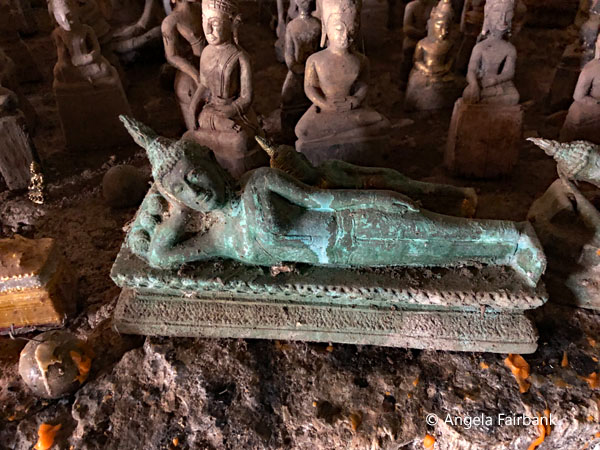   After checking into a far nicer hotel than the one in Vientiane, we headed out to a riverside restaurant where a rather rushed lunch was had. We then boarded our private, luxury, long boat and motored upriver a couple of hours to the Pak Ou Caves (Lower and Upper) and climbed up 278 steps to view several thousand Buddha statues of all shapes and sizes left by pilgrims over the centuries. There are said to be 2,500 sculptures located in the lower cave and 1,500 in the upper cave. As we motored on back downriver to Luang Prabang, we photographed the sunset, despite the fact that there had been heavy clouds most of our river trip and rain had threatened, although thankfully never fell. It was a peaceful trip, and we saw a few locals on the river and on the shore, growing vegetables, fishing, and managing fish farms. At one point, we watched a ferry taking truckloads of teak logs over to the other side of the river. The only wildlife we saw were a few domestic dogs and four herds of water buffalo, although unfortunately our boat was traveling too quickly for me to get any good photos of the latter. We were told that the only wildlife in the river were fish, the largest being giant catfish weighing up to 100 kg!
      We returned to our hotel to freshen up and then wandered through the night market with what seemed like several dozen, if not hundreds, of vendors selling very similar stuff, though we decided not to buy anything (not even the fried silk worms seen among my photos here) since we will have two more nights here after today. We then ended up at an empty restaurant at the riverside again, where we ordered the only vegetarian dishes on the menu. We were introduced here to the local specialty, called Khaiphaen, a snack made from freshwater green algae gathered from the riverbed in the dry season. It is washed, hung to dry, pounded, and pressed into fine sheets along with pieces of garlic and sprinklings of sesame seeds. The sheets are flash-fried and often served with chili dip and Beer Lao and is rich in minerals and vitamins.
   Monday, December 15: Luang Prabang, Laos
Today I was up at 5:30 a.m. to witness the giving of alms to monks and novices. Unfortunately, given the early hour, it was still dark and my camera was unable to take any suitable photographs during the first hour or so. My iPhone did a slightly better job, and I took a couple of short videos with it. The monks and novices, dressed in orange, arrived in single file down the street our hotel was on, so all we had to do was step onto the sidewalk outside our hotel. After the first three or so small groups, a large group of Chinese (or were they Korean?) tourists came to our street and sat on a line of small plastic stools. They were provided by their tour organizers with bamboo baskets of rice and plastic gloves with which to serve it. After waiting a good half hour after the aforementioned small groups had come and been served by locals, a large group of orange-robed males finally arrived, carrying large pots with lids, which they opened for each handful of rice from these tourists. Thank goodness, it was finally light enough to photograph them by this time. I was curious because right where I was standing to get these photographs of the novices' faces was a large open basket and each orange-clad male took a handful of rice out of their large pots and threw it into this large basket at my feet. Our guide, Pong, later explained to us that these seemingly rejected handfuls of rice were given to local ladies, who turned them into patties of sticky rice for the monks and novices and brought them later in the day to their temples, in addition to meat and vegetables. These monks and novices reside at a total of seven temples in Luang Prabang.          After returning to my room to take a shower, I then had breakfast and we met Pong for a walking tour of several UNESCO-listed buildings, starting with 100m-tall Phu Si (or Phou Si), a sacred hill at 150 metres above the town, and located in the centre of Luang Prabang, between the Mekong and Nam Khan rivers. We climbed a total of 328 steps past several smaller temples, shrines, and buddha statues until we reached the top for its wonderful views and the 24m gilded That Chomsi stupa. Coming down the other side of the hill, descending a further 328 steps, we arrived at the former king's palace, built in 1904, which has now been turned into the National Museum. It was constructed for King Sisavang Vong and his family during the French colonial era. After the death of King Sisavang Vong, the Crown Prince Savang Vatthana and his family were the last to occupy the palace. After the revolution in 1975, the building was taken over by the government. The palace was then converted into a national museum and opened to the public in 1995. We were not allowed any cameras, phones, or backpacks here and, in fact, had to put all the belongings we had with us in a locker. It was unfortunate because there was some super memorabilia in the museum/palace and the interior decorations were quite elaborate. There was even a building with a collection of the royal family's cars and carriages, not to mention photos of their drivers. I asked Pong where the members of the royal family of Laos were now and was told they were living in France. The real story I read later is rather sad. The monarchy in Laos ended on December 2, 1975, when the communist Pathet Lao overthrew the US-backed Kingdom of Laos, forcing the last king, Sisavang Vatthana, to abdicate. The kingdom was abolished, becoming the Lao People's Democratic Republic, and the royal family members were sent to re-education camps, where King Sisavang Vatthana and his family reportedly died from harsh conditions, starvation, and neglect in the late 1970s or early 1980s. Reports suggest that the King, Queen, and Crown Prince perished around 1978-1980, while other members of the royal family, such as Prince Soulivong Savang, went into exile and continue to represent the monarchy from abroad. Pong later added that the royal family still owned land in Laos.
         We then walked down toward the Mekong riverside once again and on to Pong's own temple, where he was a novice monk from age 7 to 14. Vat Xiengthong Sayaroharamathibodimahavihanh, or Wat Xiengthong, built in the 16th century by King Say Setthathirath from 1559 to 1560, is one of the oldest and the most beautiful monasteries in Luang Prabang and praised as an architectural gem of Luang Prabang for its historical and artistic value. Here again it was quite spectacular with similar artistic design on the temple exteriors to what we had seen in the royal palace interiors, i.e. lots of decorative work using coloured glass representing people and animals. Pong also pointed out the dormitory where he had slept for these 7 years in a room with 5 or 6 other novices. He told us that of his particular group, all had left the monastery with the exception of one, and that person was now the director of the temple. He also told us how, for them, every day had been fairly similar: up at 4 a.m. to chant, then to clean the temple on a rotation basis, then a wash and out at 5:30-6:00 a.m. to collect alms as we had seen current monks and novices doing this morning. They would eat only twice a day: at breakfast and then lunch at 11:30 a.m., after which they would be allowed no food for the rest of the day. However, they were allowed to drink liquids and Pong said he particularly liked to drink Ovaltine for its sugary sweetness. The novices have their own school and do not join the children at the regular government school. Although the curriculum is similar, novices also learn to write and read Sanskrit.
         We stopped at a restaurant for an early lunch on our way back to the hotel and then returned to the hotel to freshen up. After Pong left us, the British policewoman and I took a look at the children's cultural centre cum library and then explored a few shops that are not part of the night market. I managed to find a fridge magnet I liked. My final visit was to an art gallery, which had some wonderful portraits of hill tribe people, but they were massively expensive. I remember seeing similar art to what I am seeing here when I was in Chang Mai and Chang Rai, Thailand, sometime in the 1980s or 90s. I then returned to the hotel to write up today's entry and process my photos.
    Tuesday, December 16: Luang Prabang - Kuang Si Falls - Luang Prabang, Laos
Our first visit today was to the town's food market, after which we drove into the surrounding hills, first to stop at a coffee place, which was unusual in the concept that the coffee was, shall we say, processed through civet cats and civet bears. We visited the cages of these creatures to photograph them, or at least the cats because the bears were moving around too much to photograph (perhaps they were wired on caffeine) but did not have time to buy any cups of coffee, or the necessary cash to buy any of the coffee beans or ground coffee (bags of which I never got around to photographing because, well basically, we were told to hurry because we had a lot to see today). Our next stop was at Ock Pop Tok (East meets West) community weaving project, around which we wandered whilst listening to a presentation by its British owner. En route, we saw and photographed water buffalo on the side of the road.             We then arrived at the Kuang Si waterfalls we had come to see and before exploring them, ate a basic lunch of vegetarian fried rice (all we could afford at the budget we were given) before climbing together to turquoise ponds, and several layers of waterfalls, past the Free the Bears site, which houses moon (Asiatic black (Ursus thibetanus)), and sun bears rescued from hunters, the illegal animal trade (they are poached for the use of their paws, claws, and gall bladders in traditional Chinese medicine as well as bear bile to treat liver and gall bladder conditions) and private zoos. Having reached the top section of the waterfalls, since we had an hour and a half left, I decided to climb the 574 plus 42 steps to the top of waterfalls, which are 650 feet high. I paid an extra dollar to climb to a restaurant with views called, The View, and at which one could buy tickets for ziplining. With plenty of time left after returning to the bottom of the site, I perused the shops and bought a t-shirt. Then, while we were waiting to get the electric vehicle back to the parking lot where our car was parked, I met a Chinese group in the line up who were using an app to speak to us in English and I used my remembered Mandarin to explain where we were from and how old we were.
            On our return to our hotel in Luang Prabang, I processed my photos and then returned to the night market so I could buy another magnet and a bracelet. Then, as I was walking to the regular shopping area, I saw and photographed these hilltribe women, who had apparently been selling their weavings all day and were now packing up. I continued on to a Swiss restaurant where I ordered some take out sandwiches. On the way back to the hotel, where I ate my meal, I photographed this temple and a novice monk.
               Wednesday, December 17: Luang Prabang - Phonsavanh, Laos
We had an early departure from Luang Prabang in another van with Pong driving and his wife, Noy, in the passenger seat. As we exited the city, we passed more monks in their quest for alms and then drove along scenic mountain roads to Phonsavanh in Xieng Khouang province, located 400 km northeast of Vientiane. This province has a total land area of 15,992 km 2 and is located about 1,100 metres above sea level. We were here because it contains the famous and mysterious Iron Age Plain of Jars, which became a UNESCO World Heritage Site on July 10, 2019. Phonsavanh became the new provincial capital after Xieng Khouang Town (today's Muang Khoun) was destroyed during the Second Indochina War. On the way, we passed Khmu and Hmong villages and stopped at a stall selling dead mice, rats, and exotic colourful birds. We were told that the vendors here were the children of Hmongs recruited by the CIA to fly fighter planes in the Vietnam War. We were then stuck for five hours behind trucks where we were told that 70 percent of drivers were hooked on amphetamines, and most were driving watermelon and other foodstuffs for the Chinese. The Chinese would set up these agricultural centres in Laos and then export the produce back to China. Within Laos however the workers and drivers were Lao people. It was here that I took photos of children arriving from school, some of whom seeing us, spontaneously danced for us.          It seemed to me as though these truck drivers were abandoning their vehicles on the road, thus preventing the traffic from moving either way. It was certainly frustrating, but there was nothing much we could do about it, although I did see Noy going up to these trucks and knocking on their doors, at times finding the drivers and bribing them with cakes to get back into their trucks to get them moving once again. We ended up having a late lunch around 4 p.m. in the district capital and arrived at our hotel in the dark around 9:30 p.m. The worst thing about today surprisingly was not the truck hold up but rather the terrible road which badly needed fixing. Part of the road contained non smoothed mud from land slides caused by recent rain. It ended up being a very bumpy ride and my fellow traveler and I were wondering if the area of Laos we were driving towards with the goal of visiting it was worth all the trouble.
         Thursday, December 18: Phonsavan, Laos
Our hotel's location was quite nice: on a hill overlooking farmland, with the sound of cocks crowing. It reminded me of rural Honduras. After breakfast, we drove to a market were women were selling illegally such items as dead bats, water rats, porcupine, and cooked swallows and sparrows. Since they were illegal, they would not allow me to photograph them. After quite a long drive, we finally arrived at the Plain of Jars Museum and then drove to Site 1 with its 334 jars in a large field. A plaque at site one provides a detailed description as follows. “Site 1 is the most investigated site to date and archeological evidence ranging from Neolithic to 19th century has been discovered in burials, cultural layers, and incidental finds. Inside the jars, bones and teeth, charcoal, and glass beads have been discovered and around the jars, human bones, pottery, stone and metal objects, and glass beads in burial pits. Excavations indicate several pit burials may surround a single stone jar. If these archaeological investigations results are projected on the entire site, between one thousand and two and a half thousand burials could be present at site 1 ... Some stone jars have been affected by natural erosion, while most of the jars suffered from intentional breakage of jars by the Haw bandits and damage caused during the Second Indochina War. Natural erosion includes jars breaking along natural bedding or fault lines.” We also visited a cave (being visited by bilingual children as we arrived) with a huge bees' nest. “This natural limestone cave has two manmade holes, which can be seen from the inside of the cave. The French archaeologist, Madeleine Colani, excavated inside the cave and found lots of burnt bones, charcoal and some gravegoods; she interpreted the cave as a crematorium whereby the holes on top function as chimneys. The cave was also used during the Indochina war for shelter. The local inhabitants of Xieng Khouang believe that the cave functioned as a kiln to fire the jars. In their legend, the stones were not carved but formed out of cement.” There were several signs asking us not to climb the jars.             Site 1 was also “a strategic military position during the 1964-1974 war. The hill contains war trenches and foxholes alongside bomb craters.” From 1964 to 1973 there was a bombing mission every eight minutes, 24 hours a day, for nine years. Cluster bomb bomblets, better known as bombies in Laos, are designed as anti-personnel, anti-armour weapons, but do not discriminate and thus target and kill civilians. 580,000 bombing missions with more than two million tonnes of mainly cluster bombs were dropped. 270 million bombs were dropped in Laos and up to 30% of bombies failed to detonate which means 80 million plus live bombies remain undetonated. At Site 1, one hundred and twenty-seven unexploded ordnances have been unearthed. The ammunition includes bombs, rockets, artillery shells, and mortars. Most of the ordnances dropped in Laos were anti-personnel cluster bombs. Each cluster bomb shell contained hundreds of individual bomblets or bombies, the size of a tennis ball. ”
            “Eleven megalithic jar sites of Xieng Khuang Province, Laos, commonly known as the Plain of Jars, were recognized as a World Heritage Site in 2019 ... The Plain of Jars World Heritage Site consists of fifteen serial components: Site 1, Site 2, Site 3 (comprising six jar groups), Site 8, Site 12, Site 21, Site 25, Site 28, Site 42, and Site 52. The components range from a single jar on a hilltop to clusters with several hundred jars along with quarries and manufacturing sites. The World Heritage Site encompasses 1,325 jars plus stone discs, grave markers, and related artifacts. The jars vary in size, shape, design, setting, and type of stone ... The Iron Age describes the era when humans began to make tools and weapons using iron, which occurred in Southeast Asia from approximately 500 BCE to 500 CE. Iron was abundant on the Xieng Khuang Plateau, and the civilization that controlled iron mining and trade in iron and other goods prospered, leading to the creation of this remarkable collection of jars.”
       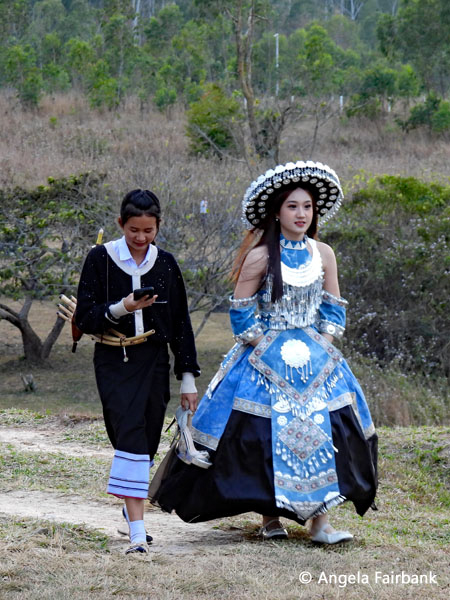  We then traveled out to the picturesque Jar Site 2, which “rests on a hillock in Ban Na Kho, Phaxay District, and is divided into three groups with a total of 93 jars, 14 discs, and some stone grave markers. Excavations have not discovered any buried human remains yet, but archaeological evidence suggests that secondary burials occurred here” We then began our almost 2-hour hike up and down a hill with a pause at a hut with large hornets climbing around on the roof. We also saw plenty of butterflies, just missed a cuckoo but saw it fly off, an unidentified snake, and plenty of cows, horses, and water buffalo, as we walked along the ridges of the rice paddies to reach Jar Site 3, which “is organized into 7 groups containing 242 sandstone jars and related burial markers, including 38 stone discs” We then returned to town for lunch, and next drove out to visit a tin/aluminum spoons etc. site (from metal recuperated from bomb, weaponry and tanks) where I bought a bottle opener in the shape of Laos. After making a last stop to look at an abandoned Russian tanker, we returned to our hotel to freshen up and then left for site 1 again to look at the shops and then to watch the sunset accompanied by complimentary cans of beer. Our final visit for the day was to the Mines Action Group (MAG) office to learn about the work they do in clearing land mines and unexploded ordnance in the area. According to one of the many panels on the walls, explaining about their work, “251 unexploded bombs have been destroyed at jar sites 1, 2 and 3; 22 hectares of land have been cleared at sites 1, 2 and 3, encompassing the equivalent of 30 football pitches; 1,444 unexploded bombs have been destroyed in villages close to the jar sites; 19 unexploded bombs have been destroyed on the walking paths between jar sites 2 and 3; and 36 unexploded bombs have been destroyed at jar sites 16, 23, 25 and 52.” We were also shown a film about MAG's work, and I learned from it that in 2013 when it was filmed, 70 countries in the world still contained unexploded bombs. When I asked the receptionist which countries these were, he told me that as of 2025 that number has now been reduced to 40 countries! I bought a t-shirt to help fund their work and then we went to have dinner, although Pong over-ordered so the rest of our food went to large family with small children.
         Friday, December 19: Phonsavan - Vientiane, Laos
Our morning drive took us across the plateau and past a rice-noodle-making village, where they dried the flat, circular rice sheets on drying racks seen here, to visit the atmospheric, ruined city of Muang Khoun, once an opulent royal capital sacked by both Siamese and Vietnamese invaders and largely finished off by American B52s. We photographed the Buddha statue at Wat Phia Wat, the moss-laden That Foun stupa, and a ruined, French administration building destroyed by a bomb in 1953. Visiting a market en route, we returned to Phonsavan, past villages where people were gearing up for their new year celebration and caught sight of women and children in traditional dress. We checked our bags into the local airport called Xieng Khouang and then drove back to Phonsavan town for lunch. Then, after saying good-bye to Pong and his wife, Noy, we took the early afternoon flight to Vientiane and were picked up by our new guide, Peng, to be checked back into our original hotel and to meet four new people: an older man from the UK and a family of three females from North Vancouver. We then drove out to Wat Si Saket, which with its 1,000 images of Buddha is the temple with the most Buddha statues in the country. Our next visit was to Vientiane's most famous monument, the gold-coloured That Luang Stupa, whose initial establishment is suggested to have been in the 3rd century AD, but which has undergone several reconstructions as recently as the 1930s due to foreign invasions of the area. It is generally regarded as the most important national monument in Laos as well as a national symbol. Its adjoining complex contained a large, golden, recumbent Buddha as well as a statue of King Setthathirath, both seen here. Our final visit was to the Patuxai Victory Gate, a war monument built between 1957 and 1968, dedicated to those who fought in the struggle for independence from France. We also had a brief view of a colourful, dancing fountain show next to it.       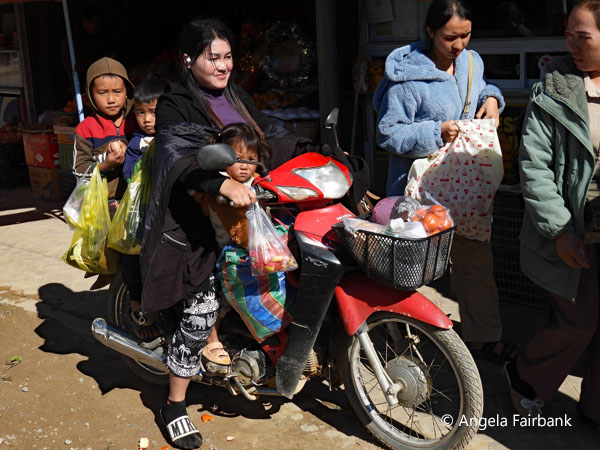   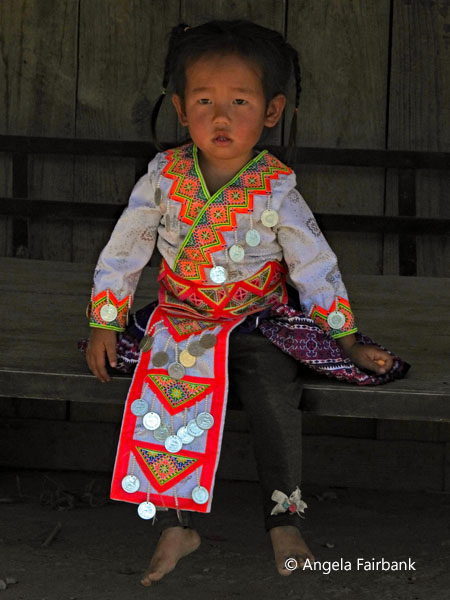    Saturday, December 20: Vientiane - Khammouane - Hin Boun, Laos
After our final breakfast in Vientiane, we packed up our van with our suitcases and took a leisurely drive southeast to Khammouane, one of Laos' most picturesque yet least-visited provinces. Our first stop was a 15th-century stupa where we saw many friendly monks working, and another reclining buddha plus mina birds and sun birds. We stopped for lunch at a basic, local restaurant, after which we took a short walk to digest along a bridge over water with a view of Thailand on the opposite shore. This soldier with cigarettes in his mouth was some local god as far as I could gather. We then visited a lively Hmong hill-tribe market and photographed a few women in costume and finally climbed (via our van) up the mountain to its top, where we stopped at a posh coffee shop and lookout, called The Rock Viewpoint, to view the impressive limestone scenery. We had a bit of time here, so I bought a coffee and a brownie. We finally arrived just before sunset at our riverside accommodation in comfortable wooden cabins with porches over the Hin Boun River in remote Hin Boun.   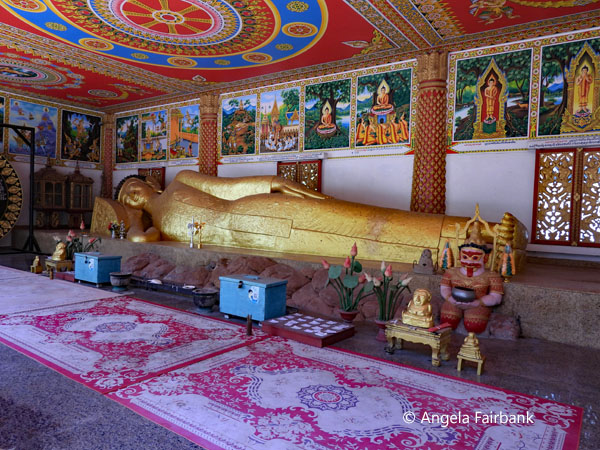        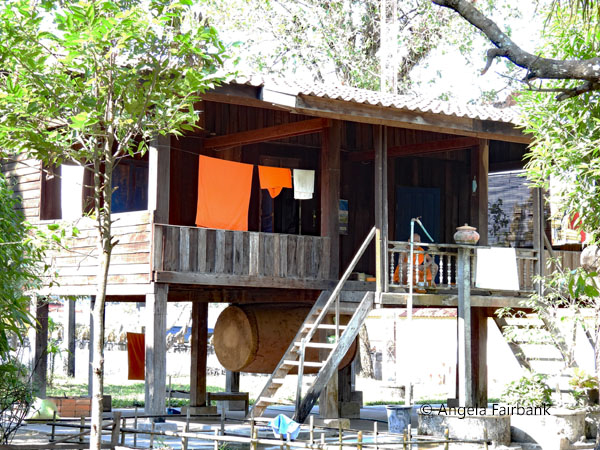 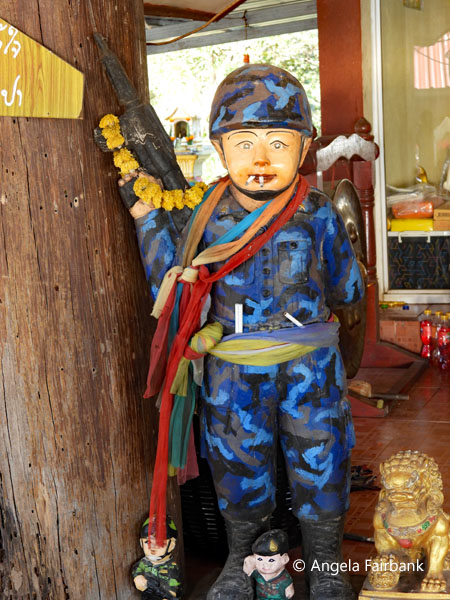        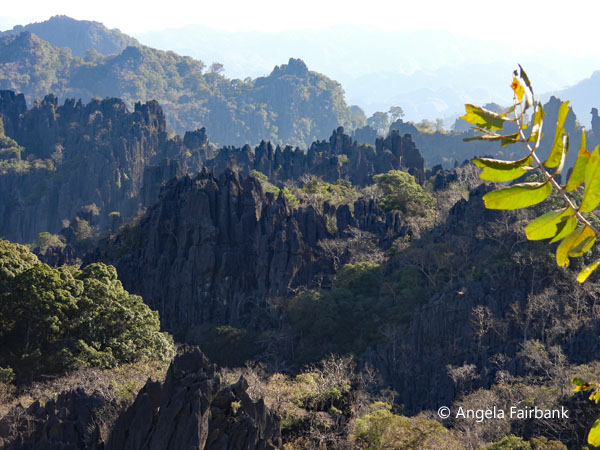   Sunday, December 21: Hin Boun - Thakaek, Laos
After a lovely breakfast served by a young Frenchman, who had emigrated to Montreal (and was living in its Chinese district) but had been living in Laos for 20 years--OK, so maybe he wasn't so young, but the important thing is that I got to speak French with him--we checked out of the hotel and were transferred to the river to don life jackets and head lamps and take a long-tailed boat with an outboard motor to explore Konglor Cave by means of a 7-km long underground river running through it. A farmer found this cavern by following his ducks one day. We had three stops along the way; the first two were so we could climb up some stairs into stalagmite and stalactite-filled sections, and at the third, we get out of the boat and waded in ankle-deep water while our draft was pulled up a 10-metre-long section of rapids. After finally emerging from the cave, we got out of our boats and climbed up into an area of shops where there were a lot of very placid cattle and then took a very pleasant walk through a Phu Thai village containing lots of lovely children to photograph. After returning to where we had started out journey, we had lunch nearby and then drove about four hours to the French-era river port of Thakaek.    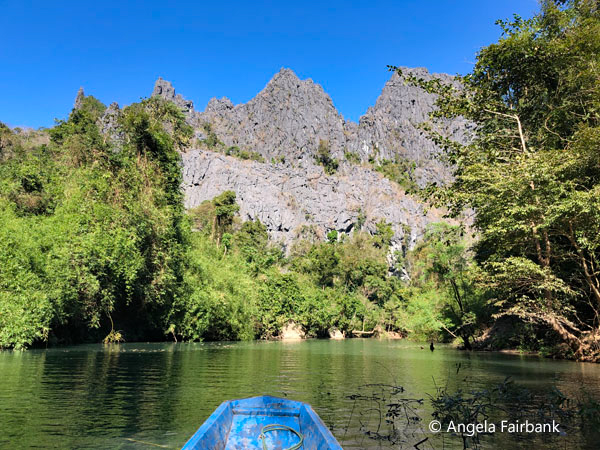    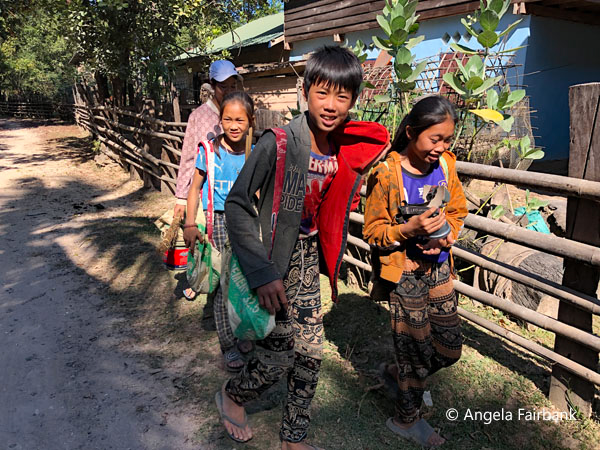       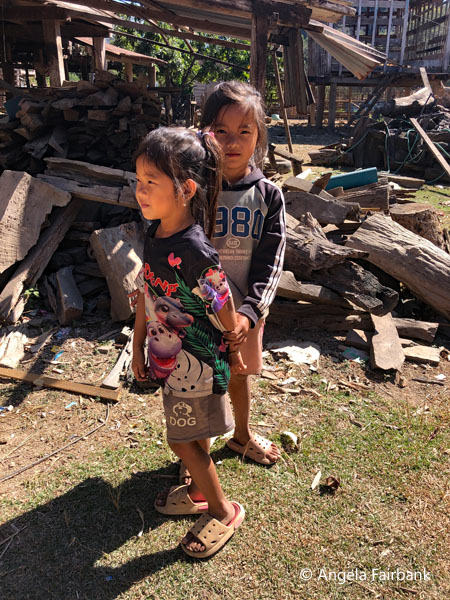       Monday, December 22: Thakaek - Savannakhet, Laos
Checking out after a delicious breakfast, we drove first to a secret 300-year-old cave temple founded by an unsuccessful fisherman in search of bats to eat, where I met a Flemish Belgian young man who was travelling around Indochina on a motorbike. We then had a brief walk to a market where I met a young Swiss-French couple, who'd been staying at the same hotel as us and had helped bring my heavy suitcase down two flights of stairs as there was no elevator, and then onward to Nong Thao Lake with its vast, colourful cave network, inside of which were these two young monks. We next had a short visit to a village, where I photographed some of the locals. We returned to Thakaek to enjoy lunch at our hotel, passing a long line of male (in orange/yellow/brown) and female (in white) Buddhist pilgrims on the way. We then took an afternoon drive south to the riverside city of Savannakhet and checked into another riverside hotel, where I was able to work on my photos and travelogue. I went out to capture the sunset and photographed this wonderful painting inside the restaurant. Then I ordered some Mexican food for dinner for a change of cuisine and ate it in my room. This particular hotel contained a large number of geckos that were crawling about on the ceiling outside our rooms.          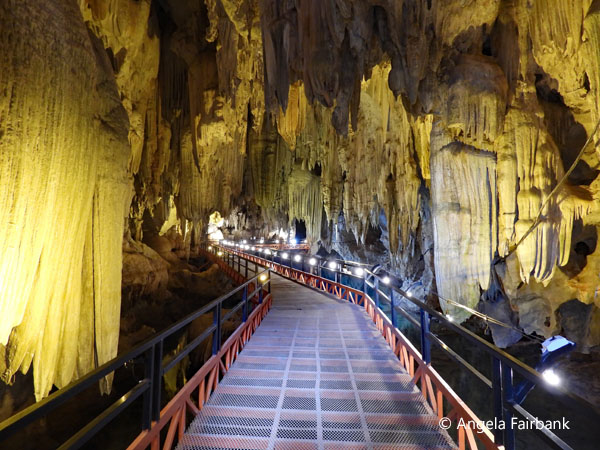     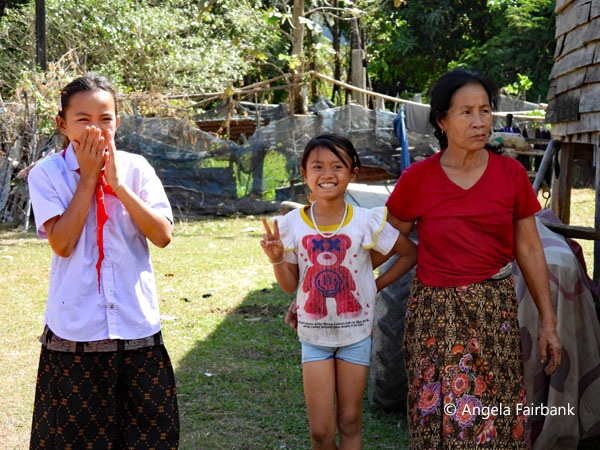       Tuesday, December 23: Savannakhet - Paksé, Laos
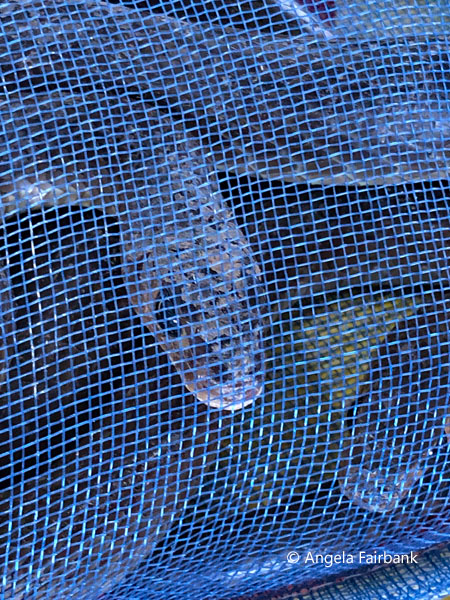
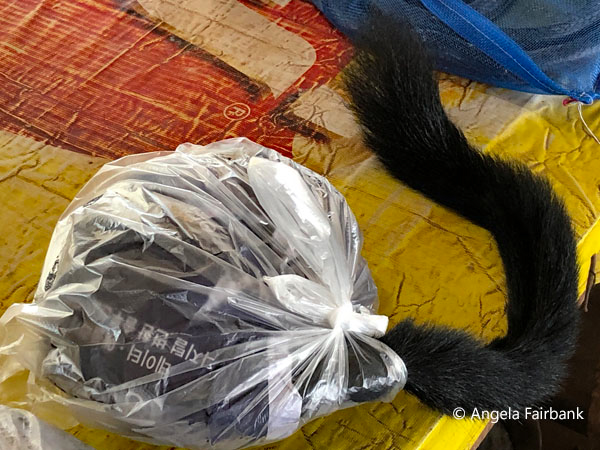
After an excellent breakfast at the Pilgrim Inn, we checked out and drove to the Mekong riverfront to walk along it and view various religious icons, including a large Buddha on a hill on the Thailand side of the Mekong. One feature of this riverwalk was a large Naga (a mythical, powerful serpent or dragon-like water spirit revered as a protector, ancestor, and bringer of rain), guarding the Mekong, which was mysteriously shedding tears. On the ground and in the trees here were zebra doves (Geopelia striata), also known as the barred ground dove, or barred dove. We then walked into the market area where I checked out the local price of an iPhone 17 (it was the same price as what I would have to pay in Canada, curiously enough, despite Laos being a developing country).     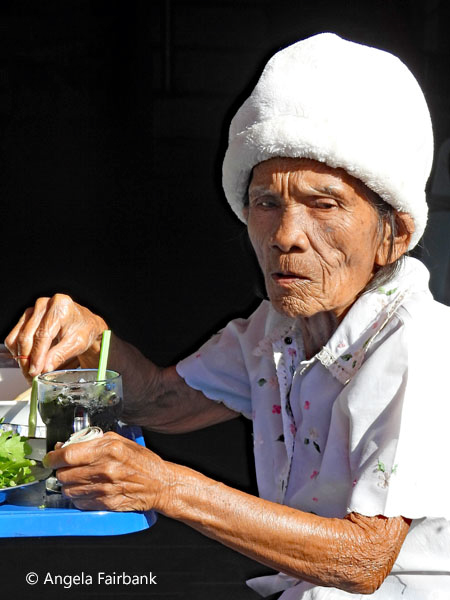     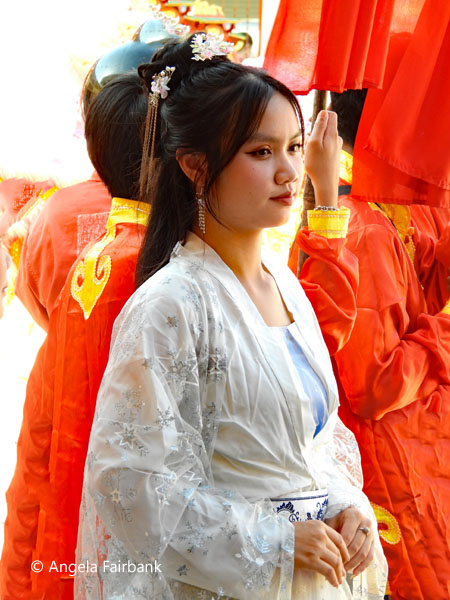   We admired French-period architecture, a phone booth still in use, the Catholic church, and got to watch a Chinese lion dance and meet kindergarteners, shown here. We then continued our journey south and stopped at a market with regularized wild animal sales, including crickets, silkworms and other insects, birds, rabbits, squirrels, snakes, and eels. I say regularized because they were being sold legally under more hygienic packaging than what we had seen a few days earlier up North. There were a couple of Common Hill Mynas (Gracula religiosa) in a cage, probably for sale, displaying their bright orange beaks and yellow patches behind their eyes. I bought some wooden chopsticks here as well as a coconut shell scoop. Our lunch consisted of rather tepid fried rice, which we ate at yet another roadside cafe.
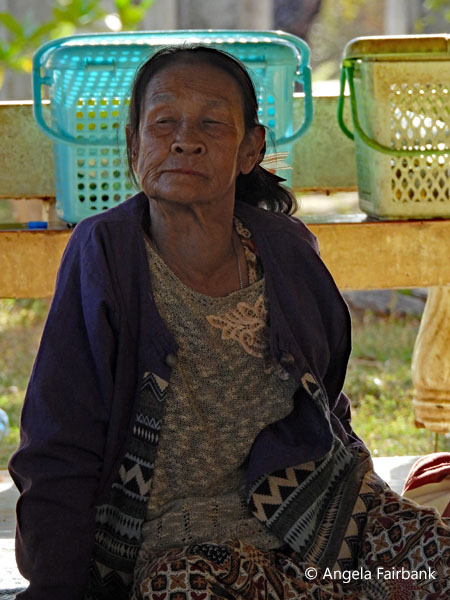
            We then drove onward to a village that carves buddhas from sandstone which contained a large temple, said to contain the largest Buddha in Laos, at Wat Phou Salao, located on Salao Hill across the Mekong River. Here we saw and photographed nuns, monks, and novices. We arrived at yet another old, French-period river port, called Pakse, around 4:00 p.m. and checked into Paksé Hotel, constructed under the supervision of the last king of Champasak, Chao Boun Oum, and the first tall building to appear on the horizon of this provincial capital. I managed to get some clothes washing done and then worked on my photos. We had a rather good dinner out with our driver, Ting, as he is leaving us tomorrow.
               Wednesday, December 24: Paksé, Laos
Today after breakfast at our hotel, we jumped into a new van with a new driver and toured some of the sites of the Boloven Plateau, home to numerous ethnic minorities and the centre of Laos' coffee-growing industry. The day included a visit to a Ta Oiy village, where children were playing with homemade kites made of plastic bags, and which contained a small catholic church and a creche. The old man you can see in one photograph here is 83. We then visited the knife-manufacturing village of the Lavay ethnic group and then visited a tea and coffee plantation by foot up to a small waterfall. On the way, we saw plenty of spiderwebs made by Golden Orbweavers (Nephila laurinae) and Spiny Orbweavers (Gasteracantha cancriformis, as well as the spiders themselves. This particular walk culminated in a visit to a coffee-manufacturing facility cum coffee shop where I bought some butterfly pea tea, a bag of ground coffee, and a cup of mocha coffee to drink. We had lunch at the impressive Tad Gneuang Falls, after which we walked down some steps to the base to photograph them and their resulting rainbows. Our final stop was at a large local market featuring loads of raw meat, bats, frogs, and plenty of fruit and vegetables. Around 4:00 pm, we arrived back at our hotel, where I first processed my photos, and then met some of our group on our hotel's roof top restaurant at sunset for happy hour drinks (given that it was Christmas Eve) and for dinner. I shared a vegetarian pizza with one of my fellow travelers. 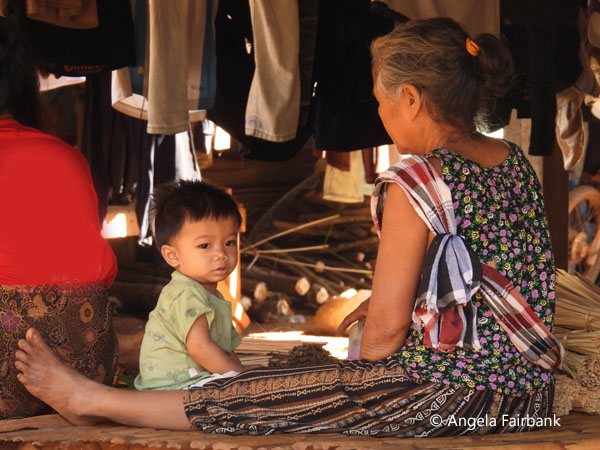         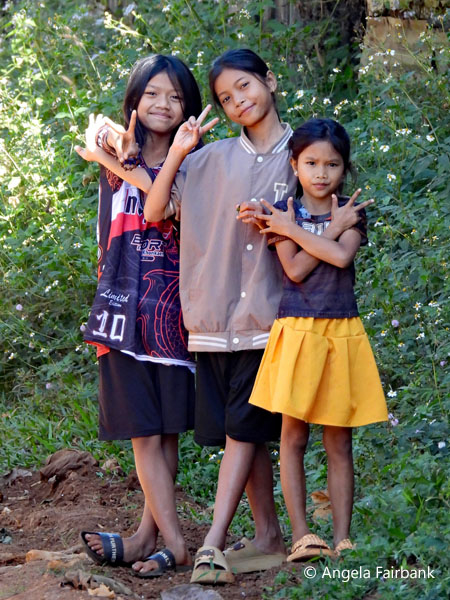              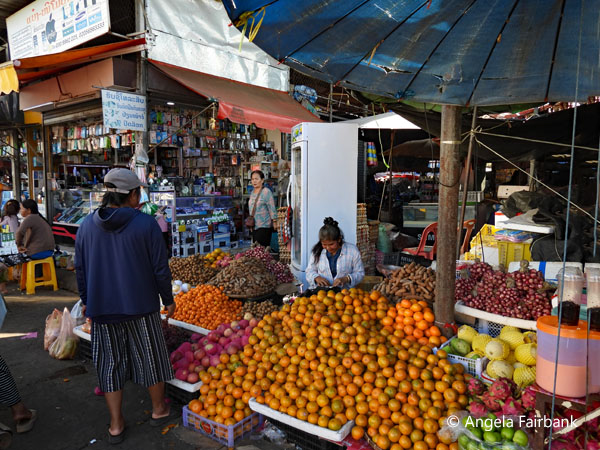     Thursday, December 25: Paksé - Champasak, Laos
We checked out of our hotel after breakfast and were driven to a landing site on the Mekong River to board a 2-hour, slow, long-tailed boat trip downstream to the riverside town of Champasak. On the way, I photographed this Grey Heron (Ardea cinerea jouyi). After checking into the guest house, which was on the riverside, I ate the provided, in-room snacks, worked on my photos, and sent a few Christmas emails and WhatsApp messages to friends and family. After a bit of a rest on my porch with a book, we then met up again for a late afternoon stroll down the road from our hotel to discover the town's French-period villas, ancient Buddhist wats, and art stores and meet children returning from school on their motorcycles and bicycles. We stopped for dinner by the river for good but very un-Christmasy food among the mosquitoes and returned to the hotel in the dark. The town reminded me of other rural places I have been to in Southeast Asia, perhaps Thailand or Indonesia. It was so wonderfully relaxing and unassuming, I felt I could stay longer. It was the perfect place to spend Christmas Day.    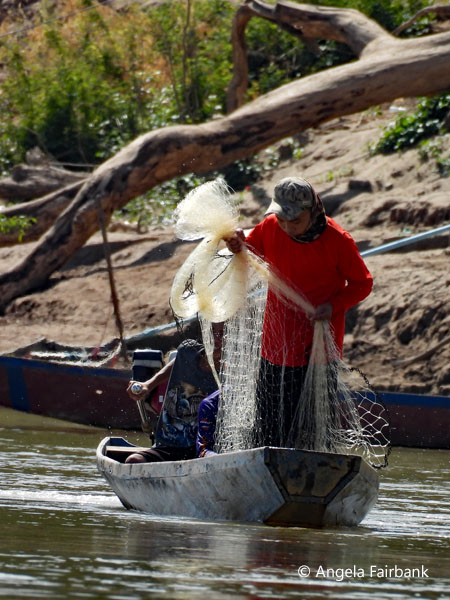 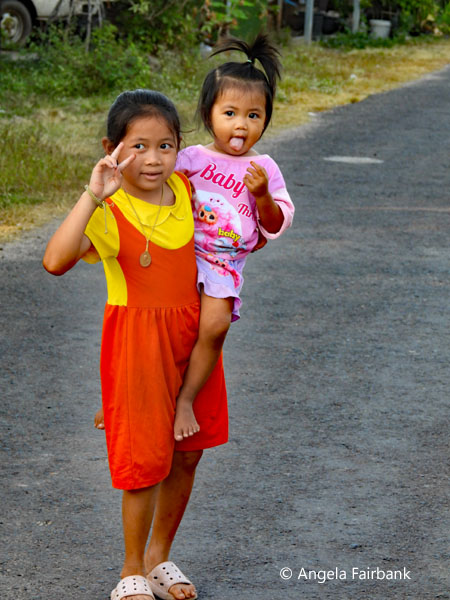   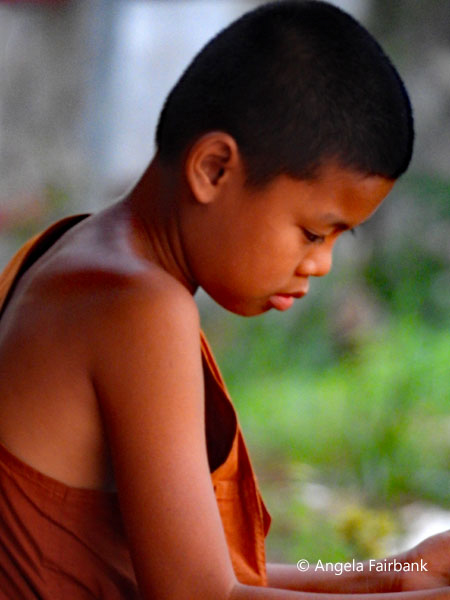     Friday, December 26: Champasak - Wat Phu - Champasak, Laos
After breakfast, we took a morning visit to the UNESCO World Heritage Site of Wat Phu (Vat Phou), a pre-Angkor, Khmer, Hindu temple, and one of the oldest places of worship in Southeast Asia, dramatically situated on a mountainside overlooking the Mekong valley. We climbed up several steps and admired the views. This was followed by a short walk to visit some of the lesser-visited, outlying temple ruins. The monks we met here were visiting from Thailand! In one ancient temple, one of the other passengers and I were invited to sound the gongs, which were set a major third apart. Wildlife included this long green snake that whipped across our path, a Common Sailor (Neptis hylas) butterfly at the well, this male dark archduke (Lexias dirtea) butterfly, and this Indian pond heron (Ardeola grayii) on the lotus pond. We ate lunch back at our guest house and then, as we had a free afternoon, I spent it working on my travelogue.                  Saturday, December 27: Champasak - Khone Island, Laos
I was privileged to watch the sun rise over the Mekong before having breakfast at the guest house restaurant, which was inhabited by a number of very cute, very friendly, very photogenic kittens. Then we packed up and put our bags on a tuktuk for a short drive to the river to board a boat. This boat took us to the other side of the river where we boarded our luxury van and drove almost two hours south along the highway toward Cambodia. We then got out and boarded a second boat that took us along the Mekong through the 4,000 islands area to our lunch place, which had a lot of flowers and butterflies to photograph: including this Grey Pansy butterfly (Junonia atlites), Lime swallowtail butterfly (Papilio demoleus), Common Mormon (Papilio polytes), and Tiger milkweed butterfly (Danaus chrysippus) seen below. The food here, however, was underwhelming. We then took a short stroll through the village, which specializes in making bamboo baskets to store sticky rice. We boarded a third boat at that stage and this time motored to Khone Island where our guest house for the next two nights is located. After settling in and processing my photos, I walked across the nearby bridge because I was told it was a spot from which to watch the sunset. This bridge goes between our quieter island, Don Khone, and another, noisier island, Don Det, which, based on the crowd on the bridge, seems to contain old hippies. I then returned to my room to finish working on my photos and write up my travelogue.                  Sunday, December 28: Khone Island, Laos
After breakfast, we boarded two tuk-tuks, each piloted by women drivers, and took a tour around the island of Khone, stopping first at Liphi Falls, which included stops at various sites to photograph, and the spotting of white herons and a few smaller birds, including this Grey-headed Canary-Flycatcher (Culicicapa ceylonensis), butterflies, and this dragonfly and a deceased Jewel beetle (Sternocera aequisignata). We then continued along the nicely built road, which we were told lay on the track of the old WW2 Japanese railway, built by the Lao by hand under French supervision. We had the afternoon free, although the electricity was off at the hotel, so I had to work sans Wi-Fi and sans being plugged in.  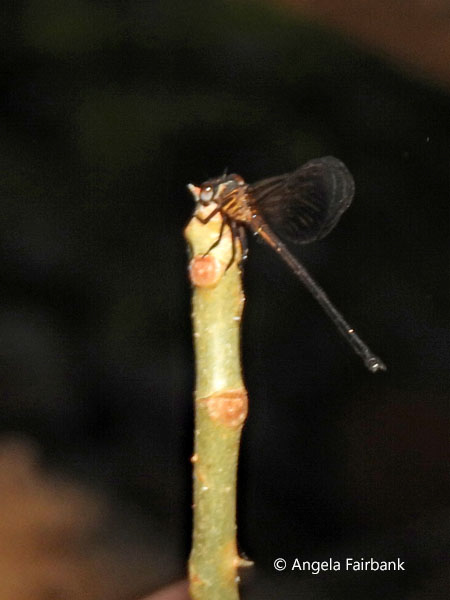  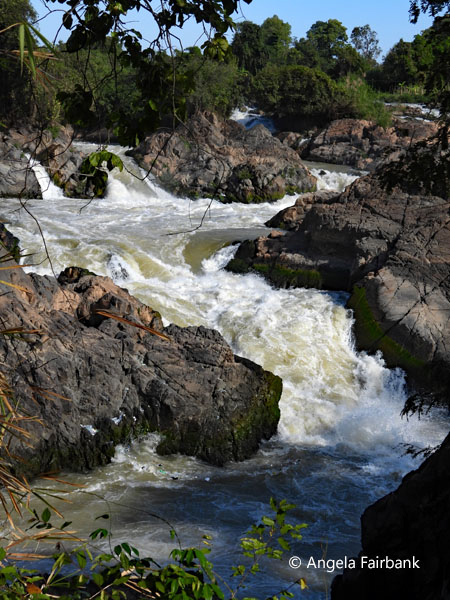         Monday, December 29: Khone Island, Laos - Stung Streng & Kratie, Cambodia
Breakfast was our last meal in Laos, and I took a photo of these two little girls who were constantly playing in the restaurant. (I believe they live across the road, and their mother works at the restaurant). We then got ourselves and our luggage into a longboat once again and watched life go by on the Mekong as we were ferried back to the mainland. We took a bit of a meander on foot through a market to reach our new van and new driver, who first drove us to another set of falls on the Mekong, called Khone Phapeng Falls. It was here that we learned that these falls are listed as number 9 in the “top 10 wonderful waterfalls in the world.” In order, these are: 1. Virginia Falls in Canada; 2. Niagara Falls in USA and Canada; 3. Angel Falls in Venezuela; 4. Kaieteur Falls in Guyana; 5. Iguazu Falls in Brazil; 6. Rhine Falls in Switzerland; 7. Victoria Falls in Zambia and Zimbabwe; 8. Murchison Falls in Uganda; 9. Khone Phapeng Falls in Laos; and 10. Huka Falls in New Zealand. There was a famous Manikhoth sacred tree here. Vendors at the site were selling dried frogs. There was also a temple where, to sound a large gong, one had basically to stroke it downwards until it sounded and echoed (not an easy task because I tried).    We then said good-bye to one of our fellow travelers from the UK as he was heading to another tour in Thailand and carried on south in the same van to the border with Cambodia (not my first time here as I visited Siem Reap and Angkor Wat in December 2018). Peng helped carry my suitcase to the Laos side of the border, where our passports were stamped and our visas marked 'USED.' He then walked with us down to a barrier, where we waited for our Cambodian guide, Chet, to join us, and said good-bye to Peng. Inside the Cambodian immigration building, we were asked to fill out a form which was stapled into our passports and more stamps added. We were not required to scan our luggage at either side. This was all done at the remote town of Stung Treng. We then piled into a Korean-made van driven by a Cambodian driver called Song. It was then a seemingly long, two-hour ride with a toilet stop (where I saw but was unable to photograph a party of six people on one motorcycle, two adult women and four small children!) We then stopped again a half an hour later at a place where about 92 freshwater dolphins live and cavort in the Mekong River.
   “A Folktale of the Dolphin. Once upon a time, there lived a Tevada (a male angel) on a huge sacred tree and a girl in a nearby village. The Tevada fell in love with the girl when he saw her bringing food to the spiritual tree to pray for happiness in her family and her community. This was because he was her husband in their past lives. The Tevada attempted to meet her again, but he could only go to her house during nighttime and had to transform himself into a python. The girl was frightened when she saw this snake for the first time, so ... the Tevada decided to show her his real appearance and told her about their connections in ... previous lives. The Tevada python visited the girl every night until the girl's parents discovered them together. The Tevada described his story to them and guided them to [the location of] a treasure ... The girl's family found the treasure and became a rich household in the village. The story of a girl getting married to a python and becoming rich spread rapidly to other villages. In another remote village, there was an envious couple with a daughter who heard the rumour and intended to replicate it. Therefore, they decided to marry their daughter to a python too. The father went to the forest and found a starving wild python. He excitingly (sic) brought it home. A wedding of the daughter and the snake groom was celebrated and attended by many relatives and friends of the family. However, many guests were surprised at this weird wedding. When the night came, the bride was left alone with the hungry snake. The python started swallowing its prey, the girl. She shockingly shouted out for help but ... was ignored by her parents. After a while, the parents became sus pelted (sic) when they no longer heard the voice of their daughter. They immediately found only the snake with its enlarged body in the room. They cut open the python to save their daughter. Luckily, the girl was still alive, but sadly her body was contaminated by the snake's blood and secretion. Although she tried to wash, the contamination with fishy smell remained. She was so embarrassed and upset. Hopelessly (sic), she decided to kill herself by throwing herself into the river. Suddenly, her body turned into a dolphin and began swimming in the river. It was believed that the dolphin has existed since then.”
   First, however, since we were hungry, having eaten breakfast at about 7:00 a.m. and it was now about 2:00 p.m., we had a rather substandard lunch before getting on yet another boat to observe said dolphins. Much like my experience earlier this year in Suriname where a similar trip was taken to see pink dolphins, although we did see some, they were very hard to photograph. After that, we piled back into the van and drove about 30 to 40 minutes to the town of Kratie and checked into our hotel, called Mekong Dolphin Hotel. After being given an hour to settle into our rooms and rest a bit, we went out for a walk along the road beside the Mekong to a bar over the Mekong where we had happy hour drinks and watched and photographed a rather splendid sunset, as you will see from the images. We then tried to buy some snacks in a 7-Eleven but we couldn't find anything very nutritious. I did perchance to stop and talk to a woman on her motorcycle with her three small daughters. After had I asked her in English if I could photograph her, she went over to a nearby kiosk to get onto the Wi-Fi so as to write a sentence in Cambodian into her phone, which was then translated into English, probably via Google, which said that unfortunately she did not speak English. I then wrote in English into her phone a polite request to photograph her and her daughters on the motorcycle and she agreed after reading its translation into Cambodian. It was dark by this time, so, of course, the resulting photo (taken with my iPhone) is slightly blurred.
   Wikipedia mentions that the Kingdom of Cambodia is a country in Mainland Southeast Asia ... bordered by Thailand to the northwest, Laos to the north, and Vietnam to the east, and has a coastline along the Gulf of Thailand in the southwest. It spans an area of 181,035 km2 (69,898 mi2), dominated by a low-lying plain and the confluence of the Mekong River and Tonlé Sap, Southeast Asia's largest lake. It is dominated by a tropical climate. Cambodia has a population of about 17 million people, the majority of which are ethnically Khmer. Its capital and most populous city is Phnom Penh, followed by Siem Reap and Battambang.
   In 802 AD, Jayavarman II declared himself king, uniting the warring Khmer princes of Chenla under the name 'Kambuja.' This marked the beginning of the Khmer Empire. The Indianized kingdom facilitated the spread of first Hinduism and then Buddhism to Southeast Asia and undertook religious infrastructural projects throughout the region, the most famous of which is Angkor Wat. In the 15th century, it began a decline in power until, in 1863, Cambodia became a French protectorate. Following Japanese occupation during World War II, Cambodia declared independence from France in 1953. The Vietnam War embroiled the country in civil war during the 1960s, culminating in a 1970 coup which installed the US-aligned Khmer Republic and the takeover of the communist Khmer Rouge in 1975. The Khmer Rouge ruled the country and carried out the Cambodian genocide from 1975 until 1979, until they were ousted during the Cambodian-Vietnamese War. Peace was restored by the 1991 Paris Peace Accords and subsequent United Nations peacekeeping mission, establishing a new constitution, holding the 1993 general election, and ending long-term insurgencies. The 1997 coup d'état consolidated power under Prime Minister Hun Sen and the Cambodian People's Party (CPP).
   Cambodia is a constitutional monarchy and multi-party state, although the CPP dominates the political system. The UN designates Cambodia [as] a least developed country. Agriculture remains its dominant economic sector, with growth in textiles, construction, garments, and tourism leading to increased foreign investment and international trade. Corruption, human rights issues, and deforestation have remained challenges in Cambodia's post-conflict development. The official and most widely spoken language is Khmer, and the most widely practiced religion is Buddhism. The country's culture and traditions are shaped by its Angkorean heritage and international influences over its history.
 The Khmer language is a member of the Mon-Khmer subfamily of the Austroasiatic language group. French, once the language of government in Indochina, is the language of instruction in some schools and universities that are funded by the government of France. There is a French-language newspaper, and some TV channels are available in French. Cambodia is a member of La Francophonie. Cambodian French, a remnant of the country's colonial past, is a dialect found in Cambodia and is sometimes used in government, particularly in court. Since 1993, there has been a growing use of English, which has been replacing French as the main foreign language. English is taught in universities and there is a press in that language, while street signs are bilingual in Khmer and English. Due to this shift, [English is now mostly] used in Cambodia's international relationships and has replaced French both on Cambodia's stamps and, since 2002, on Cambodian currency. I consequently practiced the four phrases I asked for in Cambodian during the rest of the day: Hello susiday, thank you (very much) awkuun (jaran), delicious chinan, and goodbye lihai.
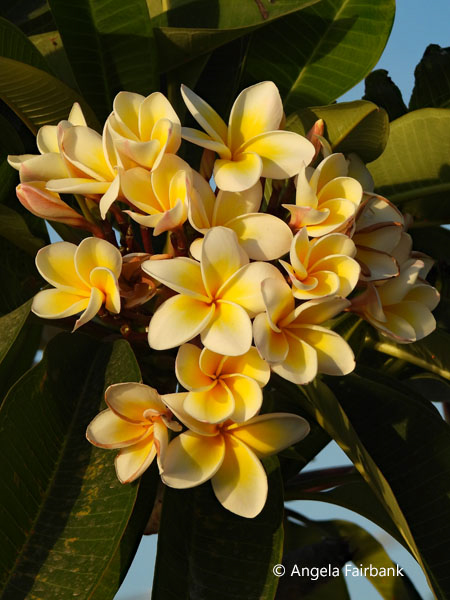
Tuesday, December 30: Kratie - Phnom Penh, CambodiaHaving seen the breakfast menu at the place where we had consumed happy hour drinks at sunset last night, we decided to have breakfast there too, and the painting you see was by the toilets. We then continue southward past multiple lotus fields, rice fields and white Brahmin cattle (Zebu) through Kampong Cham Province, stopping at the well-preserved 12th-century site of Wat Nokorbachey. It contains some lovely buddha statues and splendid, colourfully decorated interiors. A wedding photography session was going on here and I got some snaps of the bridal couple and entourage. Back at the other Hindu temple in Laos, Wat Phu, Peng had told us that most frangipani flowers had five petals and it was considered lucky to find a flower with six petals. I found one beneath the frangipani tree located in the inner courtyard of today's temple and photographed it.     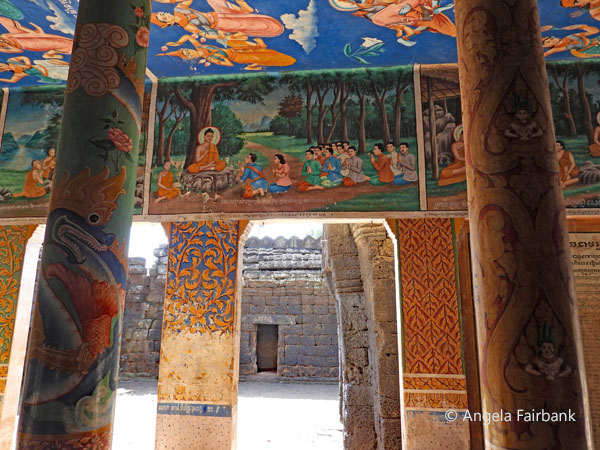                           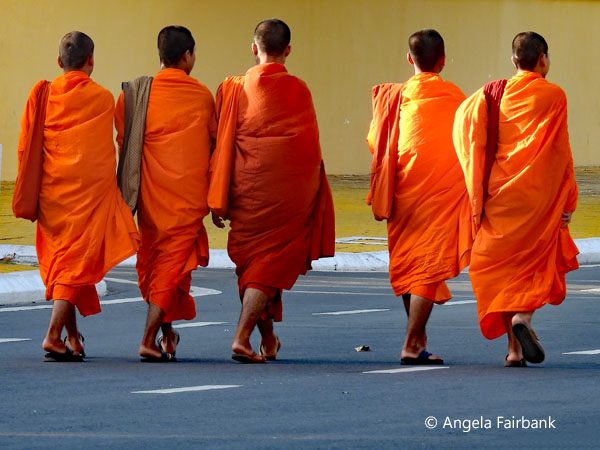       Wednesday, December 31: Phnom Penh, Cambodia - Singapore I was up early to grab breakfast at the hotel before being transferred in my own van to the airport. I then spent some time in the Singapore Airlines lounge before boarding my flight to their country, which I last visited in 2018. Taking a taxi to my hotel, and after checking in, I walked to the nearest mall to get take-away sandwiches for my lunch and dinner. On my way back to the hotel, I was caught in an unexpected, sudden, hot, rain shower, and had not thought to take my umbrella. Then I worked on processing my photos from yesterday. I watched a film on the TV around dinner time, but soon fell asleep, so I missed the New Year's Eve drone-based fireworks a fellow passenger in Laos had mentioned to me. In any case, I had been told by the hotel that I wouldn't be able to see these celebrations from my hotel room anyway (neither was the hotel roof accessible to guests) and that it would be a longish bus ride to get to the area where the festivities were happening. So be it. Instead, I looked up information on Singapore and thanks to Wikipedia, again, discovered the following information. The Republic of Singapore is an island country and city-state in Southeast Asia. The country's territory comprises one main island, 63 satellite islands and islets, and one outlying islet. It is about one degree of latitude (137 km or 85 mi) north of the equator, off the southern tip of the Malay Peninsula, bordering the Strait of Malacca to the west, the Singapore Strait to the south along with the Riau Islands in Indonesia, the South China Sea to the east, and the Straits of Johor along with the State of Johor in Malaysia to the north. During its early history, Singapore was a maritime emporium known as Temasek; subsequently, it was part of a major constituent part of several successive thalassocratic empires. Its contemporary era began in 1819, when Stamford Raffles established Singapore as an entrepôt trading post of the British Empire. In 1867, Singapore came under the direct control of Britain as part of the Straits Settlements. During World War II, Singapore was occupied by Japan in 1942 and returned to British control as a Crown colony following Japan's surrender in 1945. Singapore gained self-governance in 1959, and in 1963 became part of the new federation of Malaysia, alongside Malaya, North Borneo, and Sarawak. Ideological differences led to Singapore's expulsion from the federation two years later; Singapore became an independent sovereign country in 1965. After early years of turbulence, and despite lacking natural resources and a hinterland, the nation rapidly developed to become one of the Four Asian Tigers. As a highly developed country, it has the highest PPP-adjusted GDP per capita in the world. It is also identified as a tax haven. Singapore is the only country in Asia with a AAA sovereign credit rating from all major rating agencies. It is a major aviation, financial, and maritime shipping hub, and has consistently been ranked as one of the most expensive cities to live in for expatriates and foreign workers. Singapore ranks highly in key social indicators: education, healthcare, quality of life, personal safety, infrastructure, and housing, with a home-ownership rate of 88 per cent. Singaporeans enjoy one of the longest life expectancies, fastest Internet connection speeds, lowest infant mortality rates, and lowest levels of corruption in the world. Despite its small size, Singapore is organized into five regions and 55 planning areas. It has the third highest population density of any country, although there are numerous green and recreational spaces as a result of urban planning. With a multicultural population and in recognition of the cultural identities of the major ethnic groups within the nation, multi-racialism is enshrined in the constitution and continues to shape national policies. ... One of the five founding members of ASEAN, Singapore is also the headquarters of the Asia-Pacific Economic Cooperation Secretariat, the Pacific Economic Cooperation Council Secretariat, and is the host city of many international conferences and events. Singapore is also a member of the United Nations, the World Trade Organization, the East Asia Summit, the Non-Aligned Movement, and the Commonwealth of Nations. Singapore has four official languages: English, Malay, Mandarin, and Tamil. English is the lingua franca and the main language used in business, government, law, and education. The Constitution of Singapore and all government legislation is written in English, and interpreters are required if a language other than English is used in the Singaporean courts. Statutory corporations conduct their businesses in English, while any official documents written in a non-English official language such as Malay, Mandarin, or Tamil are typically translated into English to be accepted for use. Malay was designated as a national language by the Singaporean government after independence from Britain in the 1960s to avoid friction with Singapore's Malay-speaking neighbours of Malaysia and Indonesia. It has a symbolic, rather than functional purpose ... Singaporean Malay is officially written in the Latin-based Rumi script, though some Singaporean Malays also learn the Arabic-based Jawi script. Jawi is considered an ethnic script for use on Singaporean identity cards. Singaporeans are mostly bilingual, typically with English as their common language and their mother-tongue as a second language taught in schools, in order to preserve each individual's ethnic identity and values. According to the 2020 census, English was the language most spoken at home, used by 48.3% of the population; Mandarin was next, spoken at home by 29.9% Nearly half a million speak other ancestral Southern varieties of Chinese, mainly Hokkien, Teochew, and Cantonese, as their home language, although the use of these is declining in favour of Mandarin or just English. Singapore Chinese characters are written using simplified Chinese characters. Singaporean English is largely based on British English, owing to the country's status as a former crown colony. However, forms of English spoken in Singapore range from Standard Singapore English to a colloquial form known as Singlish, which is discouraged by the government as it claims it to be a substandard English creole that handicaps Singaporeans, presenting an obstacle to learning standard English and rendering the speaker incomprehensible to everyone except to another Singlish speaker. Standard Singapore English is fully understandable to all Standard English speakers, while most English-speaking people do not understand Singlish. Nevertheless, Singaporeans have a strong sense of identity and connection to Singlish, whereby the existence of Singlish is recognised as a distinctive cultural marker for many Singaporeans. As such, in recent times, the government has tolerated the diglossia of both Singlish and Standard English (only for those who are fluent in both), whilst continuously reinforcing the importance of Standard English amongst those who speak only Singlish (which is not mutually intelligible with the Standard English of other English-speaking countries). Continue to Part 2: Brunei to South Sudan. Back to Latest Travelogues page. |
All rights reserved. Website © Angela Fairbank 2005-2026.
|