Travel Blog, October 1 to November 6, 2009. Excerpts.October 8 - 11, 2009: Guayaquil, EcuadorAfter a stop in Montreal to visit family and a friend, and to see three of my travel photos exhibited at La Foire de l'Image, I went on to Toronto and Sault-Sainte Marie in Ontario to visit business contacts, and then flew with American Airlines through Miami to Guatemala City. Unfortunately, on my arrival in Guatemala, only one of my two suitcases arrived with me. So I dutifully filed a missing baggage report and hoped it would turn up the next day before I had to travel on to Ecuador.
 > >   Unhappily, this was not the case, so at the Guatemala City airport on my way to Guayaquil through Panama City, I checked with the American Airlines desk again to see if they had a clue where it might be and when it might rejoin me. The AA representative told me that according to the records on her computer it had traveled to Belo Horizonte in Brazil. Lucky it, I thought. It's enjoying a separate vacation on its own! The agent promised me she would try her best to make sure it was sent on to Guayaquil after it had returned to Miami, and I felt the chances were good since I had three whole days (and nights) in Guayaquil, which should be plenty of time for my suitcase to travel from Brazil. Fortunately, I had packed with some forethought this trip, and had divided my clothing between the two bags and so had half my stuff with me and all my toiletry items, so I did not suffer too much the next three days.
My main reason for travelling to Guayaquil was to visit a construction show, which, frankly, was rather disappointing and viewable in a total of less than an hour. Yet I had booked into the hotel for three nights so what to do? I asked at the hotel desk if they could recommend a tour agency but they said everything was closed, as it was a holiday weekend for the Festival of Guayaquil. I decided to take the hotel's free shuttle to the airport thinking I might have better luck there, since, usually, airports have booths with tours for visitors. However, once again, as it was a holiday, I was not so lucky as there was only one agency of the about four or five that had booths at the airport that was actually open and I had to wait a long time for service. I finally talked to one of the girls at the desk and she phoned around to several tour agencies but they all said they were taking the day off. Finally the girl recommended a friend of hers who used to work at the agency but was now doing his own thing - it was in fact kismet because Daniel, her friend, was indeed free the whole weekend and was very willing to take me around to visit the highlights of his city. First, he took me to visit the Historic Park, which not only had a zoo of sorts with magnificent opportunities to photograph the flora and fauna of the region, but also an historic area with reconstructed buildings typical of the colonial period as well as traditional dancing and a theatrical production.                    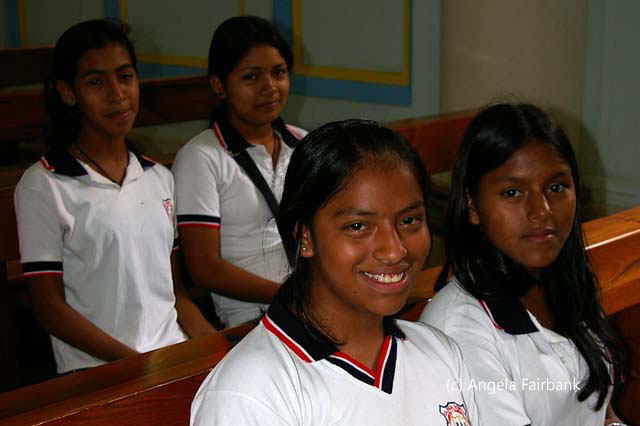         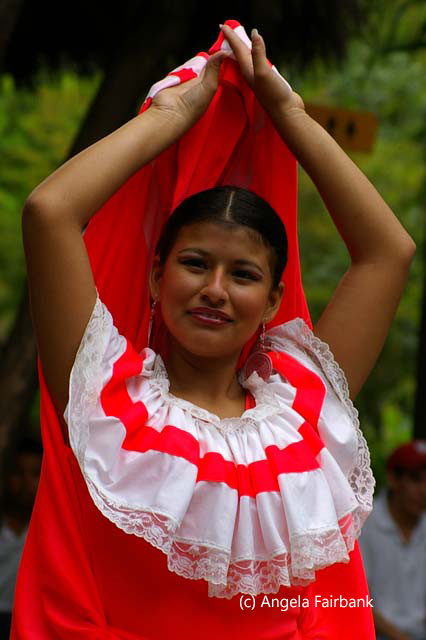 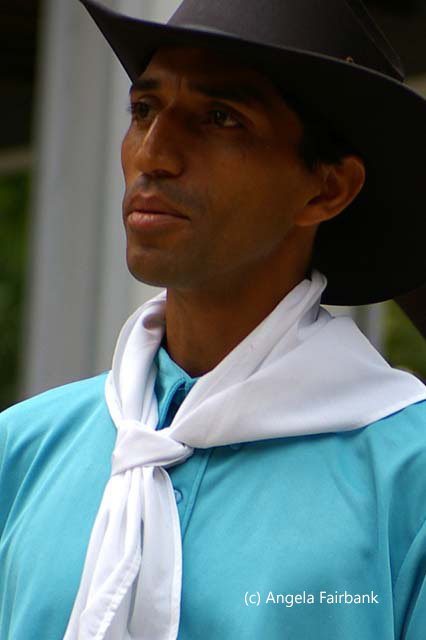   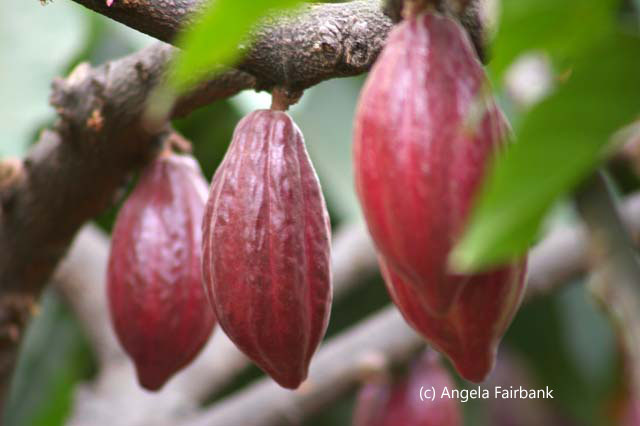 Next, we went to the Botanical Garden a bit of a drive away, which, although the entry fee cost the same as the Historic Park ($3.00 per person), was disappointing regarding its contents. It did have a small orchid centre and butterflies (most of which seemed to have flown away) as well as a good hill for viewing the surrounding area, but that was about it. Plus we got sprayed by the sprinklers that were playing across the walking path! My camera was not happy with that!
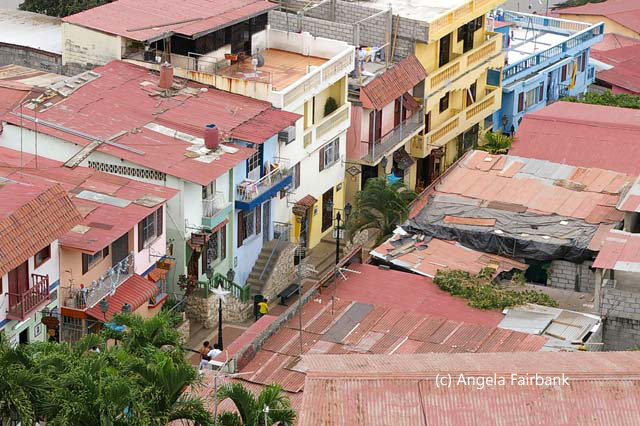
   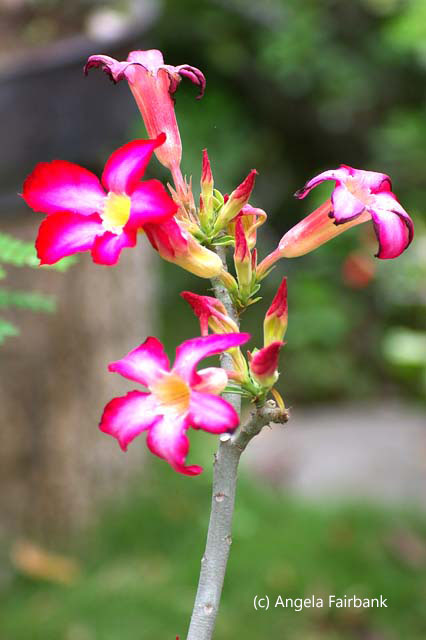      Then, having turned back toward the downtown area, we climbed up the 444 stairs of Santa Ana Hill, to reach the small church and lighthouse at the top as well as to achieve good overall views of the City and the Las Peñas neighbourhood. After returning to ground level again, we tried to visit the General Cemetery but they did not allow cameras inside and as we had a lot of ground to cover in one day I decided to skip it.
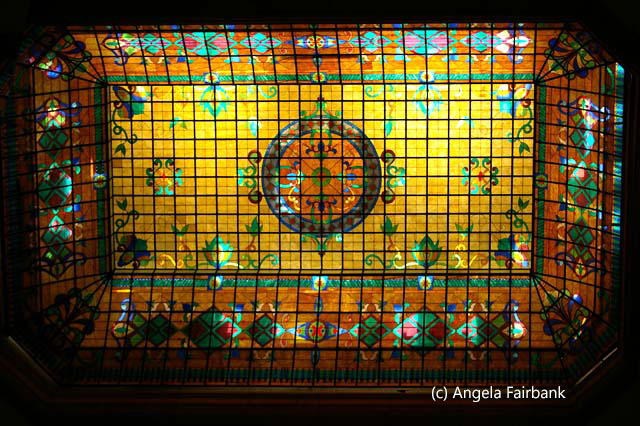
         It was overclouded for most of the day and we headed downtown for lunch at McDonald's, but first we stopped at Seminario Park also know as Iguanas Park as these reptiles live here - in the trees and on the ground - as do some turtles. People feed the iguanas, but are not allowed to touch them. Then we had a brief stop at the Neo-Gothic Cathedral with its marble and stained glass.
         Our final stop was the Malecon, (our short visits to another church and a museum did not inspire me to photograph anything). This is a 1/2 mile waterfront along the Guayaquil River and the place was fairly busy, but thankfully not as busy as the day before (Friday), which was the holiday. We had driven by it on the way to the trade show on Friday evening and it was packed solid with people. It is definitely popular with children and artists (Photos 60-62 and 64). Photo 63 is the Moorish Clock Tower next to the Malecon which has a bit of a history.
      Sunday, after I had visited a furniture fair on the Malecon, Daniel drove me to the airport but he kindly acquiesced to my taking a couple of shots of him as I said I would recommend him on my site to anyone going to Guayaquil who needs a good, safe driver and an excellent tour guide in Spanish. Thanks again, Daniel!
October 12, 2009: Irazú, Cartago and Lankester Gardens, Costa RicaIn the San José airport, I was overjoyed to see my luggage again. The hotel staff in Guayaquil had been extremely kind when listening to my saga and found out for me that it would in fact be waiting for me at the American Airlines desk in Costa Rica. On my arrival at my hotel in San José, I made a thorough check of its contents, since I saw that my lock had been cut off. Indeed there was the inevitable piece of paper left by the US customs saying that they had opened my bag to inspect it - not the first time by any means that this had happened, although I wondered why they felt it necessary to inspect it as it was only transiting through their country and it was not my initial intention for it to remain in the USA overnight, if indeed this had been the case. To my absolute shock and horror, however, I found that three items had been removed from my luggage, 1) a brand new two-gigabyte memory card for my digital camera, 2) a brand new USB drive that would allow me to upload the images stored on my camera memory card to my lap top computer and 3) my lovely green socks that had been returned to me by my girlfriend in Montreal after almost a year's absence from my property. Strangely enough, the customs people had left in the suitcase the cardboard wrappings in which the electronic items had been store wrapped. As these items were brand new, they had had to cut into the tough store plastic and remove them from the packaging. But there was no clue as to why they had removed my green socks. Perhaps one of the customs staff had a green outfit with which the socks matched perfectly?!
The day after the evening I arrived in San José, Costa Rica, it was another holiday. But this time, with some forethought, I was able to book a tour on line via Gray Line Tours. On the tour I chose, we drove through the Orosí Valley and visited the highest volcano in Costa Rica, the colonial city of Cartago, and Lankester botanical gardens. As it had rained and the clouds were off the mountains, we were advised that it was best to visit the volcano first. At 11,000 feet above sea level, the Irazú Volcano is said to resemble the moon's surface. As we walked around three different viewing points, the clouds gradually rolled in so we were lucky to see the crater lake when we did because afterwards visibility was practically zero.       Our next stop was Cartago, Costa Rica's former capital city, where we visited the Los Angeles Basilica. The story behind this basilica is that a small statue of the Virgin Mary was discovered on a rock by a peasant girl in Cartago. She took it home but the next morning the statue had disappeared. The girl went back to the rock and the statue was in the exact place she had found it the day before. So this time she took the statue to the priest and he locked it in a small box. However, the next morning the statue had disappeared from the box and was back at the rock again.
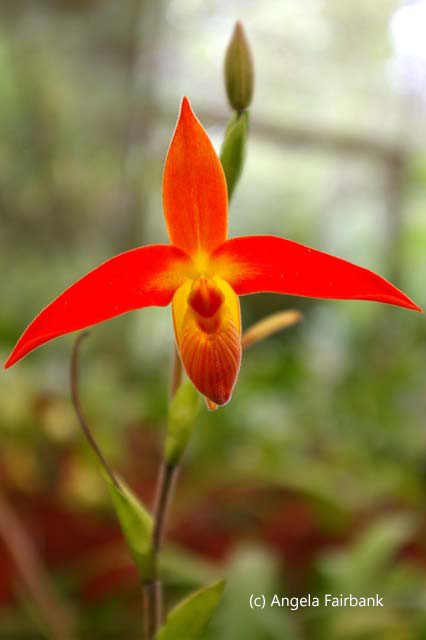
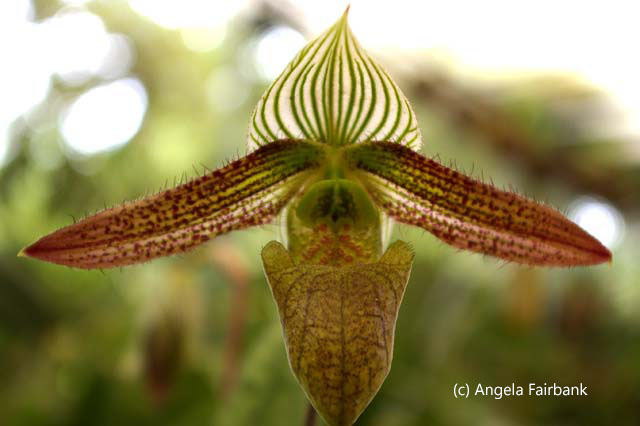
During construction, the basilica was destroyed several times by earthquakes so it was finally decided to move it to the location where the statue was found. Construction was then completed without further incident. Perhaps the earthquakes were signs that the Lady of Los Angeles wanted the basilica built at the rock where she was found. The original statue is now kept in a golden shell inside the basilica. The basilica is also said to contain a collection of small gold and silver images of human body parts, offered in the hope of healing. An official decree has declared the Virgin of the Angels the official patron of Costa Rica. In August, the Basilica is visited by about 1.5 million pilgrims from throughout the country, many of whom join in the celebrated 22-kilometre walk to the basilica from locations all over Costa Rica. Some of them crawl along the 22 kilometres on their hands and knees! As there was a service going on when we visited the Basilica, we could not get close to where the statue was stored. Yet, unlike Montreal's Cathedral where tourists were kicked out of the church when the service started, nothing was said at all to us when we entered, took photos, and walked around. At the end of the service, after communion, a large group of people started moving up the aisle on their knees (but not their hands) and a young priest in black and white robes started to peddle his CD of music up and down the aisles. A strange experience indeed (Photos 7 to 10).     Our final stop, before lunch was Lankester Gardens, since 1973 part of the University of Costa Rica, but founded in the 1940s by a British naturalist and orchidologist, Charles H. Lankester. In these gardens, which were considerable, there was a large collection of orchids and other tropical plants.
                          October 20 - 22, 2009: Merida, Yucatan, MexicoAfter Costa Rica, I travelled to Panama and due to a late arrival at night and an early morning departure I had only one full day in Panama City and the morning was devoted to visiting a business contact. The afternoon came on to heavy rain so I was glad I had not made any plans to tour. However, my hotel room overlooked the Miraflores Locks on the Panama Canal, so what a great way to watch the comings and goings of the canal whilst staying both warm and dry, and working on the computer at the same time!.
After Panama, I went on to Mexico City for another trade fair (the CIHAC, reportedly the largest in Mexico and Central America). It was quite amazing to see all booths filled, when, due to the economic downturn, major trade shows in my line of work in the United States of America this year were barely half full. After visiting the Fair, I had no time to tour around, or in, the outskirts of Mexico City. I might have been able to fit in a tour on the Sunday at a pinch but I had a flight in the evening and time was tight, moreover, the prices I was quoted seemed rather steep, so I contented myself by writing up my report on the trade show I had attended and then arguing about my laundry bill with the desk clerk. I had been billed US$5.00 a piece to wash T-shirts (T-shirt washing cost more than to wash my blouses!!!) when I could have bought a new T-shirt for that much. All I got were blank stares from the reception desk and no offer at all to reduce my bill to a more reasonable price. I did not at that time mention the ten small, dead flies I had found and removed painstakingly from my drink at their restaurant the evening before. I had pointed out the napkin spotted with dead flies and red wine drips to the waiter at the time, but all he said was “No me digas!” equivalent to “You're kidding!” and again no offer to replace it. Something was rotten in this city I decided. Moreover, every time I had to fly through Mexico City's airport during the next seven days, I was charged for overweight luggage. This did not happen when I flew directly from and to other cities in Mexico! It was a pleasure to land in Guadalajara, my next stop. Happily, the Guadalajaran people I met in the business of looking after visitors were the direct opposite of those in Mexico City. Friendly, courteous, happy to make me happy. They had indeed heard of customer service, unlike their capital city counterparts. Furthermore, taxis, the hotel, and restaurants were all very fair pricewise. Again, I had a short time here so was not even able to fit in a walk around the historic city where my hotel was located after visiting my business contact in the morning as I had more reports to write up and e-mails to send off. Instead, I treated myself to a lovely, leisurely dinner on a patio overlooking a main street and watched the tourists being ferried around in horse and buggy. However, it was in Merida, capital of Yucatan State in the South of Mexico that I finally had a day off to do some sightseeing again. My business contact took me to a lobster lunch at the port of Progreso on my first full day. It's certainly worth a visit; it reportedly has the longest pier in the world and cruise ships stop here. Then on my day off, after doing my e-mails, I took off on foot for a 45-minute walk to the downtown core in the humid climate, first visiting the Monument to the Flag carved in pink limestone by Rómulo Rozo.    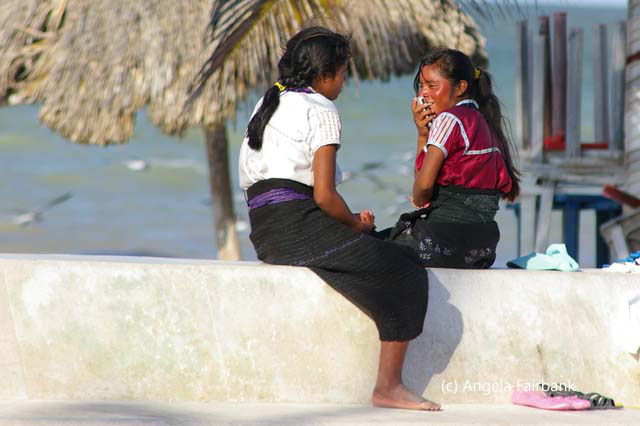   I continued down the main artery of modern Merida to admire large houses and some colourful ones. Finally, I arrived at the downtown core and ended up following a string of school children who were aged about 16, I would guess. They were walking rather slowly, slower anyway than my normal pace, and one boy noticed I was behind them and shouted ahead to his classmates, “Dejen mi amiga pasar” (let my friend pass). His friends all started ragging him about his having a “friend” so he said “OK, pues, mi tia” (aunt - much more respectful!). However, this Meridan politeness unfortunately disappeared when I finally reached the main square, perspiring and exhausted, and decided to sit on a bench and have some juice that I had carried in my backpack. After a few minutes, a Meridan man sat down on the same bench and, instead of leaving me alone in my restful tranquility, started harassing me - talking to me in Spanish about his town, asking if I spoke English, asking if I were a gringa, and using the “tu” form. I ignored him, of course, annoyed but surprised at the same time that he would choose to spend time talking to me, as unlike a young and beautiful non-Spanish speaking foreigner as you are likely to get (well not young anyway and I was dressed down with a huge floppy t-shirt, long pants, baseball cap, so no exposed arms, legs or mid-rift that might encourage some men who harass supposedly unsuspecting foreign women on their own.) I finally left my bench, disgusted, as he would not shut up, despite my non-response and therefore surely, I thought, implying my great lack of interest in him, and walked around the square. I was thinking, geez, they can't even let someone sit down for five minutes without harassing them. A few minutes later, on the other side of the square, I came to some kind of shop (I was looking into windows wondering what arts and crafts I could photograph), when suddenly another man noticed me and exclaimed 'Mama!” Did he think this would entice me into his shop? Anyway, no way could I be his mother - he must have been 10 to 15 years older than me. Did he think I would consider it a compliment? So, as you can gather, I was pretty disgusted with the behaviour of the men in downtown Merida except for the kind schoolboy. Moreover, I was asked about every 5 minutes if I would buy a hammock!
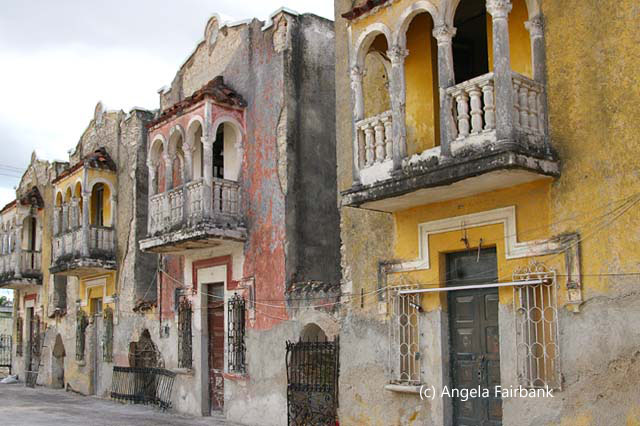      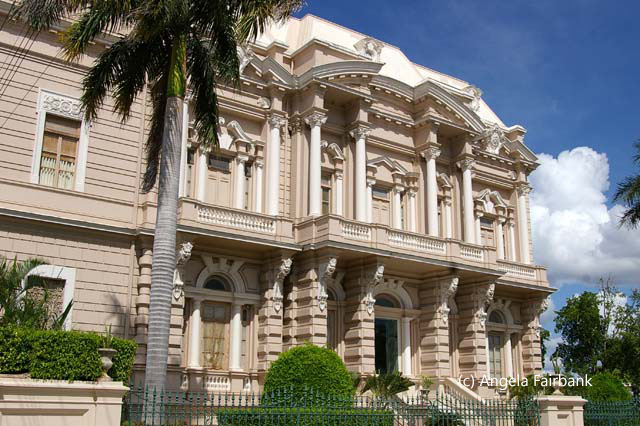         To add to my disappointment about the city of Merida, through my hotel, I had booked a late afternoon bus tour and this was one of the worst tours I had ever been on. First of all, there were only about 8 of us in the bus but no one could hear the microphone because the two (Canadian) children also on the bus were either crying or running up and down the aisle. Moreover, it was an open bus so the rush hour traffic only added to the noise level. Then, the only things that were pointed out to us on this tour were churches, houses and parks. They could have warned us beforehand that this was essentially an “architectural” tour so that people not particularly interested in architecture (myself included) could opt out. It was supposedly a two-hour tour, but for 25 minutes of it we were dropped off at a shopping centre in a 5-star American hotel (with inflated tourist prices). The photos of the textiles come from a shop called Casa de Curiosidades in this hotel.
    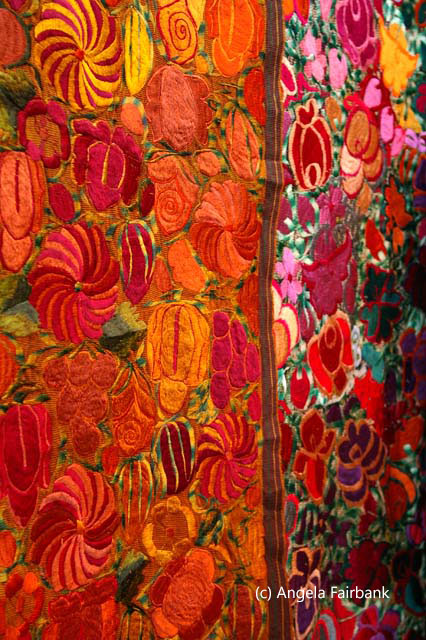    So, no, I would not recommend this tour. To make up for my disappointment, I tried to arrange a taxi ride back to Progreso 40 minutes away on the morning of my departure day as I had not had free time to photograph it properly on my first visit there with my business contact, but the “official” fee to drive there and back was so preposterous and no bargaining seemed to be possible. In comparison, it cost less to go to Chichenitzá for the whole day!
October 22 - 25, 2009: Monterrey, Nuevo León, MexicoFrom Merida in Southern Mexico, I flew to Monterrey, capital of Nuevo León in the North East of Mexico and the third largest city in this country. First of all, I found out that I had chosen the wrong hotel. I always try to stay in the same group of hotels whenever possible (to accumulate points toward free nights) and book ahead on the internet. My top priorities if there is a choice of hotels within this group and if prices are similar are 1) free shuttle from the airport, 2) free wi-fi internet in the room and 3) close to the business contacts I proposed to visit. The hotel I had chosen and booked in Monterrey claimed on its website to be closest to the airport and to have a free shuttle, but when I arrived I found this was not only untrue but that it was the farthest one of its group from the airport and was in fact on the complete opposite side of the city from the airport. You can imagine my disappointment. Nonetheless, in case I had made a mistake about noting my booking, I waited patiently for the free shuttle of the airport hotel of the same chain. In fact a shuttle from another hotel chain offered to take me to my chain's airport hotel and that hotel was in fact happy to put me up but did tell me I would probably have to pay twice as the time limit to cancel the booked hotel had expired. I opted instead to keep my original hotel and paid the taxi fare out there (luckily now reduced to about 2/3rds the price I would have had to pay, had I taken a taxi directly from the airport).
The next day, after visiting my business contact in the centre of town, beautifully surrounded by mountains on all sides, I booked the same, kind, taxi driver at a reasonable taxi price, to take me to the airport, again for a reasonable price, two days hence. I then set about finding out what tours were available from my hotel reception desk. Well, I was told, this was the off-season so there were no tours available for a single traveler on her own. So what other options were there for me, I asked. They suggested I take the metro into the city and explore some man-made steel park. This sounded like a drag so I asked what else was available. Well, there was a glass museum within walking distance... I asked, well, what is there I can see downtown? Finally, they pulled out a map of a walking tour in downtown Monterrey and again they explained I could take the metro. This sounded more my thing and to my delight the next day I found that the metro was dirt cheap (about 36 cents a ride anywhere on the system). I therefore arrived downtown at the Macroplaza and started walking along the route indicated on the map. The first stop was The Fountain of Life with Neptune and eight other figures and the walk then continued on through a grassed area called The Sunken Park containing the statues “Children in their early years” by Ponzanelli and “Maternity” by Federico Cantú among others. At the end of this park nearing the Heroes Esplanade in front of the State Government Palace (which was free to visit but you had to pick up a ticket) was a bronze horse by Colombian Fernando Botero weighing 3,306 pounds or 1.5 tons and with a height of 11 feet or 3.4 metres. Then I stopped to take photos of three statues honouring Lorenzo Garza, a Monterrey native bullfighter.       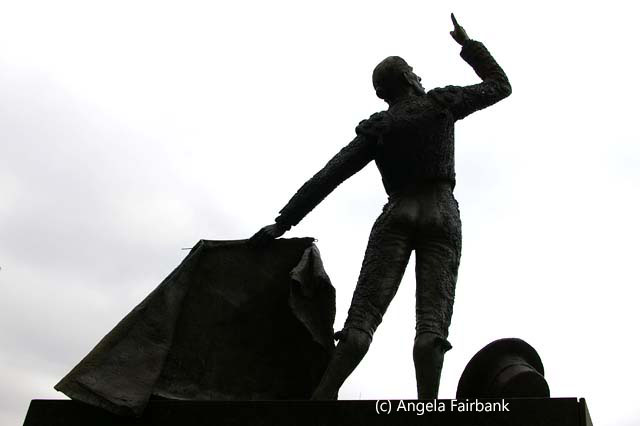   Next, I doubled back to the second section of the walking tour called The Santa Lucía River Walk and this in fact led me along a man-made jetty beside a canal considered to be the most important landmark in Monterrey. You can either walk the 1.55 miles (2.5 kilometres) or take a boat along the canal, which apparently looks lovely at night when it is all lit up in colour (according to my taxi driver), and is filled with various works of art and plays of water.
      I was surprised and delighted to come across a bird park, called the Parrot House, although there were more than just parrots, and so spent the bulk of my afternoon here photographing the birds, attending the bird, frog and snake show and cheering on the young people brave enough to try the aerial zipline ride.
                        On exiting the bird park, I found that the Santa Lucia walk led into the former Monterrey Steel Foundry (founded in 1900) that had been made into a park after the company was forced to declare bankruptcy in 1986. Here, there must have been six or seven wedding parties having their photos taken. It was a good walk so I doubled back along the other side of the canal to photograph what I had missed, noting the many sellers of seemingly very popular cotton candy and candied apples. Dentists everywhere must cringe when they come here, or think of all the paid work they will have filling cavities!
            I then turned back toward the South through the Old Quarter, supposedly great for nightlife. There were a number of old, derelict buildings with façades painted in lurid colours, their insides mainly used as parking lots. I was glad to be walking through it during the day as I was not sure I would feel safe there at night! My final photos were taken at the Metropolitan Cathedral where yet another wedding was in process. I then walked down a pedestrian street selling a lot of Halloween stuff and saw two extra-long limousines ferrying 15-year-old girls in white or purple prom dresses celebrating their “quinceñera,” with the top half of their bodies poking up through the sun roofs, and cheering about their coming of age at the top of their lungs. Then I hopped back on the metro for another 36 cents and returned safely to my hotel feeling that I really had seen the best of what Monterrey had to offer, as the places I had visited surely seemed to be the places to be and to be seen in this city. In Monterrey, the seatbelts of the taxis I had travelled in were all tied up so I asked the first driver, was it not the law to wear seatbelts? He replied yes it was and that Monterrey was the city that had the most accidents in the whole of the Republic of Mexico but that most people ignored the law and that, moreover, the police did not enforce it. Everyone talks about corruption in this country yet they seem to put up with it as being inevitable. Interestingly enough, on the morning of my departure, I had to dispute my laundry bill again as I was once more overcharged for the washing of my t-shirts. However, this time the hotel (of the same chain as the one in Mexico City) recognized their error and refunded me the difference. On the way to the airport, I had a great conversation with my 26-year-old taxi driver, unfortunately a victim of the economic depression as he was actually a trained mechanical engineer who had graduated from the University of Nuevo León right next to my hotel. However, he had been laid off four months ago and was now sharing his father's taxi doing the late shift while his father did the early shift - although he had apparently made an exception for me. October 26 - 28, 2009: Pasto, Nariño, Colombia (and its neighbouring areas)After Monterrey, Mexico, I flew to Colombia, arriving in Bogota at night, and experienced the first of my hair-raising taxi rides in this country. The hotel I stayed at this time, as this was my third visit to Bogota within the past 16 months, was three months young and its wood work - wall panels, room furniture, etc. - was all made by my Chinese manufacture client's Bogota importer, using our engineered Walnut veneer. It was so easily recognisable and made me glad that I had chosen to stay here.
However, my euphoria was dashed the next morning when the hotel reception desk failed to make the requested wake-up call and, as I had another early flight, this put me in a black mood for most of the day, never mind that I was actually up an hour earlier than called for and working on my computer as usual. The check-out, despite being labelled “Express,” was moreover inordinately slow, I found, and the taxi driver - who was in fact a good driver and I complimented him on the fact - delivered me to the international terminal instead of the national terminal so we had to do another round-about in the airport. Nonetheless, I still managed to arrive at the departure gate in plenty of time and was not charged for any overweight luggage this flight. I wished I had had my camera beside me on the plane but the seats were small and I had a large businessman sitting beside me so I missed my chance, but the arrival by air into Pasto airport, with craggy hills, cliff faces and waterfalls rushing down their sides, must easily be one of the best experiences. And the clarity of the air made everything appear at its best. Next time, I promised myself, next time. I was not prepared for the fact that the town of Pasto, at 2,500 metres altitude, the capital of Nariño department and near the border with Ecuador, is about 45 minutes to an hour away from the airport (35 kilometres) and the taxi driver took full advantage of the winding roads by driving fast and letting his tires squeal lustily around the corners. I held on for dear life, but didn't dare complain. It was more important to me that he had kicked out a businessman who had crept into the front seat of my taxi with his bag while the driver was putting my suitcases into his car boot and, more importantly, he knew where my hotel was and delivered me safely. The small hotel itself was perhaps less opulent than those I had been staying in over the previous 25 nights, but it had been recommended by my Pasto business contact, was clean and fairly quiet and the staff was kindness itself. Run by a Frenchman, all the hotel staff were young Colombian men who were eager to fetch coffee (which they called a tinto which means “red wine” in other Spanish-speaking countries so I was somewhat surprised to be offered this at 11:00 a.m. but accepted gladly), to find me an adaptor for my computer plug, and to arrange a tour for me the next day. I then called up my business contact and he arrived quickly as he lived only a few streets away and we arranged to visit his factory later that afternoon. In the evening, after the meeting, he took me for a walk around Pasto city where I had the chance to photograph a few churches, including San Juan Bautista, the oldest church in the city.    Back at the hotel, after dinner, my business contact very kindly offered advice on the tour I had planned for the next day, so as to visit the main sites mentioned in my Lonely Planet guide book. He had also done his homework and had had a look at my photography website before my visit. He therefore knew that I liked to photograph markets, so he recommended I visit Pasto's morning fruit and vegetable market. Meanwhile, one of the young men from the hotel staff negotiated a tour with a 60-something-year-old driver and my contact made sure I would be driven safely before leaving me for the night.
The tour the next day started off alright, although I never did know my driver's name - probably this was due to the generation gap! - and our first visit was indeed the morning market, which was very picturesque, not only due to the merchandise on offer but also to the carts and the horses that pulled them, and to the colourful houses on the hill behind the market. To my delight, the market people were very friendly and did not mind me photographing them and even smiled for the camera! It was a bit of a maze in there and I had told the driver that I'd be done in about 20 minutes but I managed to find the place at which I had entered the market originally without too much trouble and then began the two-hour fright-of-a-drive to Las Lajas.              I lost count of how many times during the next two hours I literally contracted my stomach muscles in fear, but this route is not for the faint-hearted. It seemed to be the driver's constant need to be in front of all other traffic, so he was forever overtaking and speeding, even through areas where there were actual signs warning him to slow down, due to construction areas, school zones, or dangerous corners. Sitting in the front, I noticed my eye going frequently to check his speed gauge, which was unvaryingly over the limit. The only comfort I could seek was to remind myself that he was older than me and if he had survived these roads thus far in his life, we would probably get through this ordeal safely. However, I did give a thought to the many crosses and flowers on the side of the roads signalling previous accidents and deaths. Need I remind you that this was hilly, nay mountainous, country, with winding roads and limited visibility? At least the sky was clear, the sun was shining sometimes, and we did not have to contend with rain, storms, fog, mist or other natural elements, so perhaps the gods were smiling on us after all.
Finally, after the promised two hours, we did in fact arrive at the Sanctuary of Las Lajas and after a stop at a paying toilet, which I dearly needed after all that travel stress, we set off down the hill toward the church. This is a minor, neo-Gothic Basilica, built on a bridge over a gorge. A vision of the ubiquitous Virgin Mary had appeared on a rock about 45 metres above the gorge and the rock is now the main altar inside the basilica. It draws many pilgrims all year round, but as it was a Tuesday there was hardly anyone - maybe a dozen or so during our visit. A church service was going on when we arrived, so I didn't like to photograph inside until it was over. On the path to the church there were plaques all over the rocks giving thanks to the Virgin and attesting to miracles that she had performed.                On the paths leading to the basilica, there are religious beads and trinkets on sale. People are fond of roasted guinea pig here and this is what is on the spit in photo 19 above. Ipiales, 7 kilometres away, has a whole section of town devoted to the guinea pig (cuy) where the houses (which double as restaurants) are colourfully decorated with images of this animal in case there was any doubt as to what was on the menu (photos 32 to 34). Photo 35 depicts a bus filled with people sitting on seats inside (as you would normally) and then because there was no more room inside, there are people lying down on the roof, a few clinging to the sides and back, and even one sitting on his motorcycle. Note that this vehicle had just managed to pass us and another was in the midst of passing us, hence the reason why we were driving on the shoulder. Meanwhile, another jeep-like vehicle was passing the vehicle in front of the bus! I am fairly confident that my driver had no inkling as to why I was taking this photo!
    At around 2:00 p.m., we arrived back at the town of Pasto and I was starting to feel a little hungry but when asked, decided to press on to our next stop, the Lake of La Concha about 25 kilometres to the East of Pasto (we had driven southward to reach Las Lajas). Luckily the roads to the lake were unpaved. This meant that the driver was forced to slow down, so I was quite relieved, as well you might imagine. On arrival, the lake was well worth the visit. In fact, if I were ever to return to this area or to advise someone else coming to this area, I'd say skip Las Lajas, and go to the lake instead. There was a lack of tourists here too, so we were the only customers in an upscale Swiss-style restaurant, where we lunched on fresh lake trout and had plenty of flowers to admire (photos 36 to 39). According to the guide book, this is one of the largest lakes in Colombia and an island within it has been declared a nature reserve. To reach the island, however, it was necessary to rent a boat and driver at a price that was equal to our lunch bill, so I had to give it a pass - next time, though, even if I have to skip lunch!
Instead, I opted to walk down the main road on my own with my camera and photograph some of the locals and their Swiss-like chalets. I was later informed by my Pasto business contact that this area was originally inhabited by Swiss immigrants but later they moved on, and the area was taken over by displaced Ecuadorians, who, if you ask them, have no idea that their houses could have come right off the Alps! I was also privileged to be able to watch an improvised soccer game with the locals.               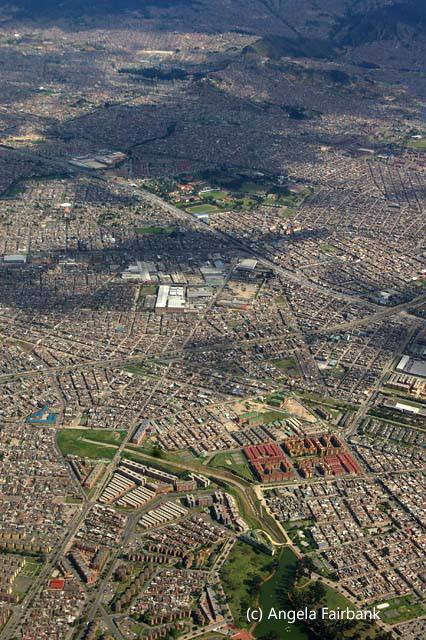 The next day, I flew back to Bogota, but this time I remembered to have my camera out on the plane. The flight out was not as spectacular as the one coming in but nevertheless the above photos do provide some idea of the mountainous territory. Photo 50 is an aerial view as we flew into Colombia's capital. By the way, as a result of the fright ride, I had noticeable bouts of strain and pain in my heart that night as it fought to re-adjust itself to my usual relaxed state.
October 31 - November 4, 2009: Cuiabá and the Pantanal, Mato Grosso, BrazilGetting out of Bogota international airport is a nightmare. You go to the usual line up to check in to your flight, but if you've been in Colombia for less than 30 days, you are told you can leave your suitcases with them but you have to go clear across the airport to get your passport stamped so that you can be exempt from paying part (half?) of the airport tax, which you can pay in USD or local currency (which comes to thousands of pesos). So you get that done and you extract the exact money from your money belt and line up at your airline desk again. You are then told that, in addition to the airport tax they mentioned before, you also have to pay a second tax. So you pull more money out of your money belt rather grudgingly. You will get two receipts, one for the first tax, and one for the second. Why can't they just tell you the full amount you will have to pay when you reach the desk in the first place? I was in a foul mood by then, so by the time I got to the desk where I got my ticket and handed over my bags, I think I put fear in the airline staff and was not in fact asked to pay the luggage overweight penalty. In the coffee shop, as I was having a cappuccino after customs and security and before walking to my gate, I overheard an American comment on all this constant harassment for money and checking of bags to his Colombian girlfriend and she told him, yes, this is the land of “Qué más?”, literally “What more?” or “What next?” implying that the corruption of this country is even worse than the others I had been through. (See my experiences in Mexico City under the heading Merida above.)
In any case, my next flight was to Buenos Aires, Argentina, and as it was about my fourth visit there, I was well familiar with less expensive transportation options to my hotel. For a great deal of the flight, we were flying over the Amazon River with its wide, chocolate brown meanderings, surrounded by dense, dark green forests. I could not understand the concerns for disappearing trees in this region, they all looked present and correct to me and working in the wood business this is a question I am often asked (about the growing scarcity of Brazilian species). Unfortunately, as there was a slight haze (or perhaps the airline window was too dirty) none of the photos I took look the same way as I saw it. I had business contacts to visit within two full days in Buenos Aires, but as I have photographed here quite a lot before, I did not feel the need to plan another tour. As it was, I did not even have time for a walk around the streets of my hotel. My flight the next day was at 5:45 a.m., which meant I had to get up at 2:00 a.m. to take a taxi to the airport as the airport bus does not travel there at that hour. Tired and bleary-eyed, I flew to São Paulo and waited for my connecting flight to Cuiabá in Mato Grosso, one of the main timber areas of Brazil. There is no properly protected area in this airport, in the most populated city in South America, to take a safe rest (I had been hit on for money in this airport during a previous visit), so I ended up walking around to keep awake and moving, trying to find a money changer at a decent rate (impossible - money changers, yes, but decent rates, no) and putting up with the inevitable pungent odour of pão de queijo. This curiously enough reminded me of the, contrarily, deliciously sweet pan de queso (cheese buns) that I'd had in Merida and loved - the ones in Brazil are savoury and the sweat-like smell permeates the entire airport! Having finally left São Paulo (photo 1), although I was dozing in and out of consciousness on the plane, I woke up sufficiently to witness our landing in Campo Grande among lush green fields full of crops and livestock (photos 2 and 3), and then took off again to land finally in Cuiabá, gateway to the Pantanal, around 5:00 p.m. However, there was a time change somewhere between São Paulo and Cuiabá, which meant that we were now in the same time zone as Santiago de Chile though we were still in Brazil.    My business contact came to my hotel in the evening for a meeting and kept me up until midnight (after I had been up since 2:00 a.m. that day!) Incidentally, it was Hallowe'en night and as Brazil is famous for its flamboyant Carnaval, I was expecting to see elaborate costumes, dancing, and to hear a cacophony of noise, but there was nothing. A young Australian tourist I compared notes with a couple of days later as I was leaving Chile for Dallas and he was leaving Chile for Sydney, told me that he had been in Quito, Ecuador on 31 October, and the entire city had put on a splendid party. Absolutely all ages were in costume and dancing and drinking went on into the wee hours. He also told me that their Presidente was visiting Russia at the time and had banned such celebrations in previous years so I guess it was a question of “While the cat's away...”
The next two days (Sunday and Monday) were family holidays in Brazil to celebrate All Saints' Day and All Souls' Day and as it was my first time in the Pantanal, I again asked at the reception desk after breakfast what tours they could organise for me. Once again I was told it was the off season and it was better to be more than one person, but there was nothing I could do about that, so I had two different receptionists working on the case for me. Once again I lucked out, for instead of getting the recommended tour agency linked to the hotel, I was found a perfectly respectable and educated tour guide who actually spoke English! I was sufficiently impressed as I listened to the various phone calls that were made by the receptionist on Sunday morning as one person referred another and that one another until they found someone who was free and willing to take me on a tour around his city (mirroring my experience in Guayaquil). My Portuguese is by no means my strongest language, but I can get by (I had gotten by talking a mixture of Spanish and Portuguese with my business contact for several hours the evening before) and I had offered the information to the receptionists that I also spoke French and Spanish fluently if they couldn't find an English speaker - they seemed to think finding a tour guide with English was necessary, though I never requested it specifically. I then spoke to Elionil, the guide whom they had found to take me on a tour of the city, on the phone myself to see how his English was, to negotiate a price and to arrange a time to meet. When we finally met around 1:00 p.m., I was delighted by his smiling face and friendly personality and (almost immediately) booked him to guide me into the Pantanal the next day. The receptionist had actually put me in contact with another guide, so that I could save a little money and travel with two other people, but that guide spoke only Portuguese, and, as it happened, he ended up having to cancel the tour, because the other two people never showed up! Could the gods be smiling on me again? Sunday was a hot day and the sun was bright, so we first started out to visit the Cuiabá River, the old, broken bridge and the fishermen of stingrays (photo 5). However, as it was a Sunday, and a holiday weekend, unfortunately, the museums and public buildings were closed so we headed to the University to photograph the animals in the (free!) zoo, animals that hopefully I would see in the Pantanal the next day, although at this time of day most of them were sleeping. Again it was a shame that so many of the birds were caged, but we did manage to see Jabiru storks, (the official bird of Brazil), capybaras (a rather prolific, large rodent), tapirs (photo 6), an anteater (photo 7), caimans, an ocelot (photo 8), coatis (photos 9 and 10), various hawks and owls (photos 12 to 14), a harpy eagle (photo 15), a sedentary river otter (photos 16), rheas (photo 17), and Elionil also introduced me to some of the fruits of the region including mango and cashew fruit (the nut which we prize in our culture he just broke off from the top of the fruit and threw away). The last two photos in the zoo series are of two darling little girls, visiting the zoo with their mother and enjoying an ice cream on such a hot day. I could not resist asking if I could photograph them (photos 18 to 20).                   We then made a stop at the River Museum, but the aquarium was closed for repair or renovation and everything else for the tourists was closed, so Elionil suggested we stop for a beer and he would take me to visit the Handicraft Museum/Shop (Casa de Artesão) on Wednesday.
On holiday Monday, we started off fairly early on an overclouded day, south-westward toward the Mato Grosso Pantanal National Park. The largest floodable wetland in the world, it offers a wide variety of flora and fauna. I learned that as it was the off-season, I would expect to see fewer birds and animals than I would in the high season of May to September, but I was here, I had my camera, it was a holiday and therefore impossible to make any factory visits; I was prepared to see what I could and the good thing was that it was not yet the rainy season so I could expect to remain sufficiently dry. We were on paved road for a couple of hours, made a stop in the town just before the edge of the park to pick up some water as it had by now become another hot day, and then changed to unpaved road once we entered the park gate. Immediately, off to the side, we spied a rather strange large lizard-like animal (a tegu lizard) walking slowly and flicking out its long, bright red tongue to catch insects (photo 21) above. There were also masses of birds, some of which I managed to catch on (digital) film. At about 11:30 a.m., we arrived at the Pousada where we would have our lunch of vegetables, beans, rice, beef, and pork. While waiting for our meal, there were hammocks to lie on and relax in and natural bird sounds to listen to. After lunch, Elionil showed me a massive book containing pictures of hundreds of birds (some endemic) that could be found in the Pantanal. I tried learning some of the more amusing Portuguese names of these birds, but now, of course, they have flown from my memory.    We had another rest in the relaxing hammocks to digest our meal and then Elionil called me over to the river to watch a deer (photo 26) that was walking along the bank. With domestic cows and horses lumbering near by, it was physically very close to them yet showed no fear. Meanwhile, Elionil had fetched a plastic bag of raw beef chunks, a large oar, and two simple bamboo fishing rods, I changed into long pants and heavier boat shoes, and we drove a short way along an unpaved road toward a clearing where there was a local family having a picnic lunch and fishing from the shore (photos 27, 28). Elionil pushed one of the two boats that were lying there out into the water, suggested I hop in and then, standing at the bow, proceeded to pole the boat along the brown-coloured river. There was not a terrific amount of bird activity since it was the low season, but we did see kingfishers, hawks and eagles, ibises, herons and various other aquatic life that I was unable to identify (photos 29 to 31, 33, 34 and 39). Elionil was good at imitating the bird calls and we were both very content in the silence as we moved upstream on our own (photo 40). There were no other boats on the river and only another couple of men fishing from the shore. The only mammal we saw was a large, fluffy, light coloured monkey that climbed toward the water along a tree branch, but as soon as it spied us it doubled back quickly (photo 38). There was also a rather amazing caiman lying in the water, its eyes wide open but unblinking. We moved close to it, silently, in the boat. I took a shot with my camera, we floated even closer, I took another shot, and then, closer still, I dared to take a third shot but suddenly, still not having blinked, it made a quite surprising plash into the water and disappeared (photo 32).
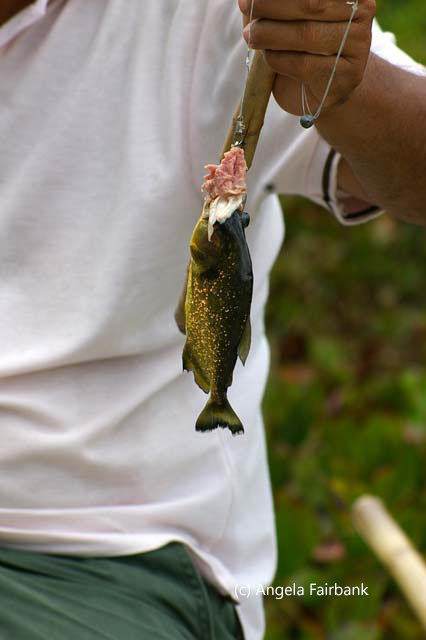
  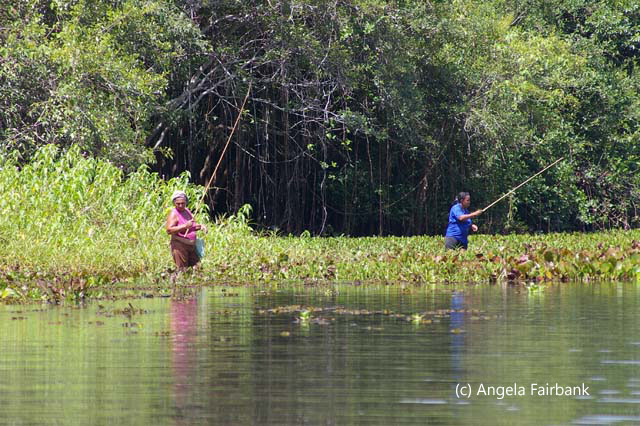       We had been on the river for more than an hour when I suggested we head back. Elionil turned the boat around, set it to drift and then pulled out the rods and the meat and began to bait his hook so that he could demonstrate the knack of fishing for piranha. He had mentioned earlier that if I had brought my swimsuit we could swim among the piranha and I had laughed and asked, “Isn't that rather dangerous?” Well, apparently, according to him, piranhas don't actually eat humans, so it is quite safe to swim in the same water with them. After Elionil caught his first piranha fairly quickly (photos 35 to 37), I managed to catch one and then Elionil caught another. It was not all that easy though because even though the idea is to dangle the line in the water and, when you feel the tug, flip the line back and bring the fish into the boat, more often than not the fish would grab the beef in small bites and knew when to quit when it felt you start to jerk the line. In any case, the ones we caught were rather small and looked harmless. I read later that they are quite nice to eat and have aphrodisiacal properties. But we fed our catch to the birds as we were not staying for dinner and anyway, I had no way to cook mine at my hotel in town!
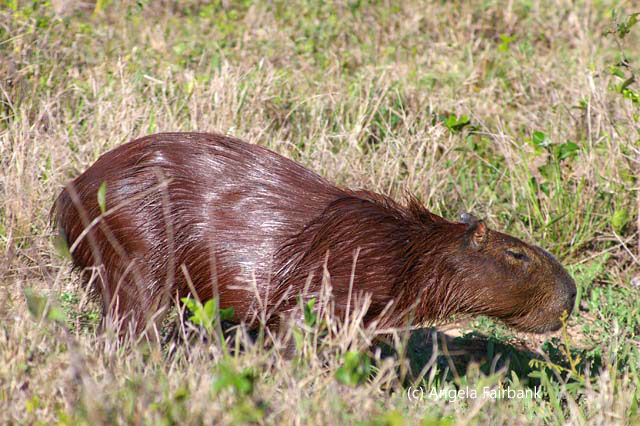
      Returning to the place where we had collected the boat, there was a platform that had been built at the top of stairs that wound up the sides of a tree, so I climbed up and was provided with a fantastic overview of the area from above the arboreal canopy (photos 41 to 43). After freshening up at the pousada again and helping to put away the boating and fishing gear, I had time for a quick beer, and then we began the drive back to Cuiabá first experiencing a sunset drive where we saw capybara (photo 44), tortoises (photo 45), and various wildlife crossing the road (photos 46 and 47, this latter of a large winged insect about 3 inches from tip to tail, dragging a dead tarantula at such a quick pace that I had to chase after it to photograph it). The sun then set and our drive turned into a night drive where Elionil stopped the car, pulled out the searchlight and plugged it into his car engine battery. It was interesting to see eyes light up on the ground, in the bush, in the trees, but I did not have my extra flash so my photographic efforts in limited light were below par. I was lucky with photo number 50: a large spider, again about 3 inches across, walked across the road slowly at night time. Elionil with his 12 years of experience looking for wildlife in the dark, noticed it, stopped the car and held the car battery light closely over it while I managed to get my on-camera flash to go off as well.
          We arrived back in Cuiabá at about 10:00 p.m. so it had been a long but successful day; very relaxing and very much communing with nature. Just what I needed at the (almost) end of a long business trip. There was still Santiago de Chile to go, but my day there was filled with three factory visits and three office visits, so once again there was no time left to tour around.
Back to Latest Travelogues page. |
All rights reserved. Website © Angela Fairbank 2005-2026.
|